

Bowel endometriosis
Endometriosis that grows on or into the wall of the bowel, usually the rectum or sigmoid colon, low in the pelvis behind the uterus.
Medically reviewed by Dr. Steven Vasilev, MD
Board-Certified Gynecologic Oncologist & Integrative Medicine Diplomate, Advanced Robotic Endometriosis Excision Surgeon, Director of Lotus Endometriosis Institute · Updated Nov 2026
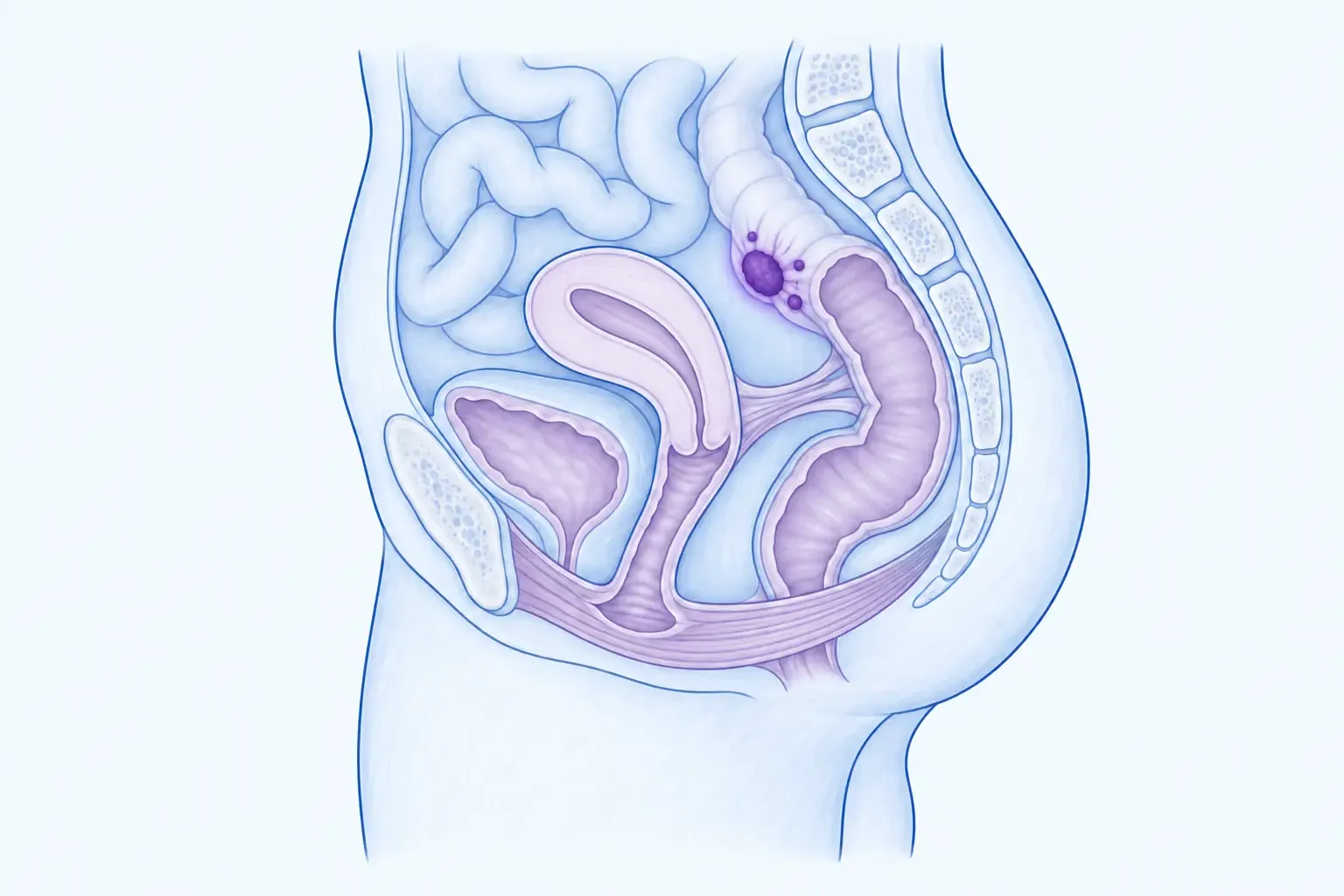
- The bowel wallHere where the sigmoid colon meets the rectum, the most common site
- The rectumLow in the pelvis, behind the uterus and vagina
- The uterusJust in front, and often tethered to the bowel by the disease
- About 5–12%
- of people with endometriosis have it on the bowel
- About 9 in 10
- are on the rectum or sigmoid colon
- Colonoscopy
- is often normal: it sees the lining, not the outer wall
The basics
What is it?
Endometriosis that grows on the outer surface of the bowel or into its muscle wall, usually as part of deep disease. As it scars, it can tether the bowel to the uterus or vagina and narrow it.
Three things to know
- It usually sits low
The rectum and sigmoid colon account for about 9 in 10 cases. The appendix and small bowel are less common sites.
- It grows from the outside in
It starts on the bowel's outer surface and works into the muscle, and rarely reaches the inner lining. That's why a colonoscopy, which looks at the lining, is so often normal.
- Not every bowel symptom means bowel disease
Many bowel symptoms in endometriosis come from disease next to the bowel, not in its wall, and need no bowel surgery at all. Imaging and a consultation tell you which.

Symptoms
How does it show up?
Often like a gut problem: pain with bowel movements, constipation or diarrhea, and bloating, typically worse around a period.
Because it looks like IBS, many people are treated for a gut condition first. Symptoms that follow the menstrual cycle are the clue worth raising. More on when IBS might be endometriosis.
- Painful bowel movementsPain passing stool, or deep rectal pressure, worse around a period
- ConstipationHard, slow or incomplete stools that flare before or during a period
- DiarrheaUrgency or loose stools, or swings between the two
- BloatingSwelling that rises with the cycle, sometimes called endo belly
- Rectal bleedingBleeding with a period: uncommon, but a strong clue
- Painful periodsSevere cramps the usual measures don't touch
- Pain during intercourseDeep pain with sex, from disease behind the uterus
- Pelvic painPain between periods, not only during them
Rarely, it can block the bowel. A swollen belly, being unable to pass stool or gas, vomiting, or pain that keeps getting worse needs urgent care.
Diagnosis
How is it diagnosed?
Expert imaging maps it before surgery. A normal colonoscopy doesn't rule it out, because the disease usually sits outside the lining a colonoscopy sees.
- Pelvic examAt the first visitCan find tenderness or a nodule behind the cervix, or a uterus that doesn't move freely. A normal exam doesn't rule it out.
- Expert transvaginal ultrasoundThe first mapIn experienced hands, shows nodules on the rectum and sigmoid, how deep they go, and how many there are. A routine pelvic ultrasound isn't aimed at the bowel.
- MRITo plan surgeryShows how far along the bowel the disease runs, and how it relates to the uterus, vagina and ureters.
- ColonoscopyTo rule out other causesLooks at the lining, so it's often normal here. Its job is ruling out other causes of bleeding or anemia, such as inflammatory bowel disease or cancer.
- SurgeryConfirms and treats itSees the disease directly, confirmed by a pathologist, and removes it in the same planned operation.
Knowing before the day whether the bowel is involved means the technique, and any second surgeon, are planned in advance, and your consent covers them, so the operation doesn't stop halfway.
Treatment
What are the options?
Medication can calm symptoms, especially when the bowel isn't narrowed. Surgery removes the disease, sparing as much bowel as possible.
Excision surgery
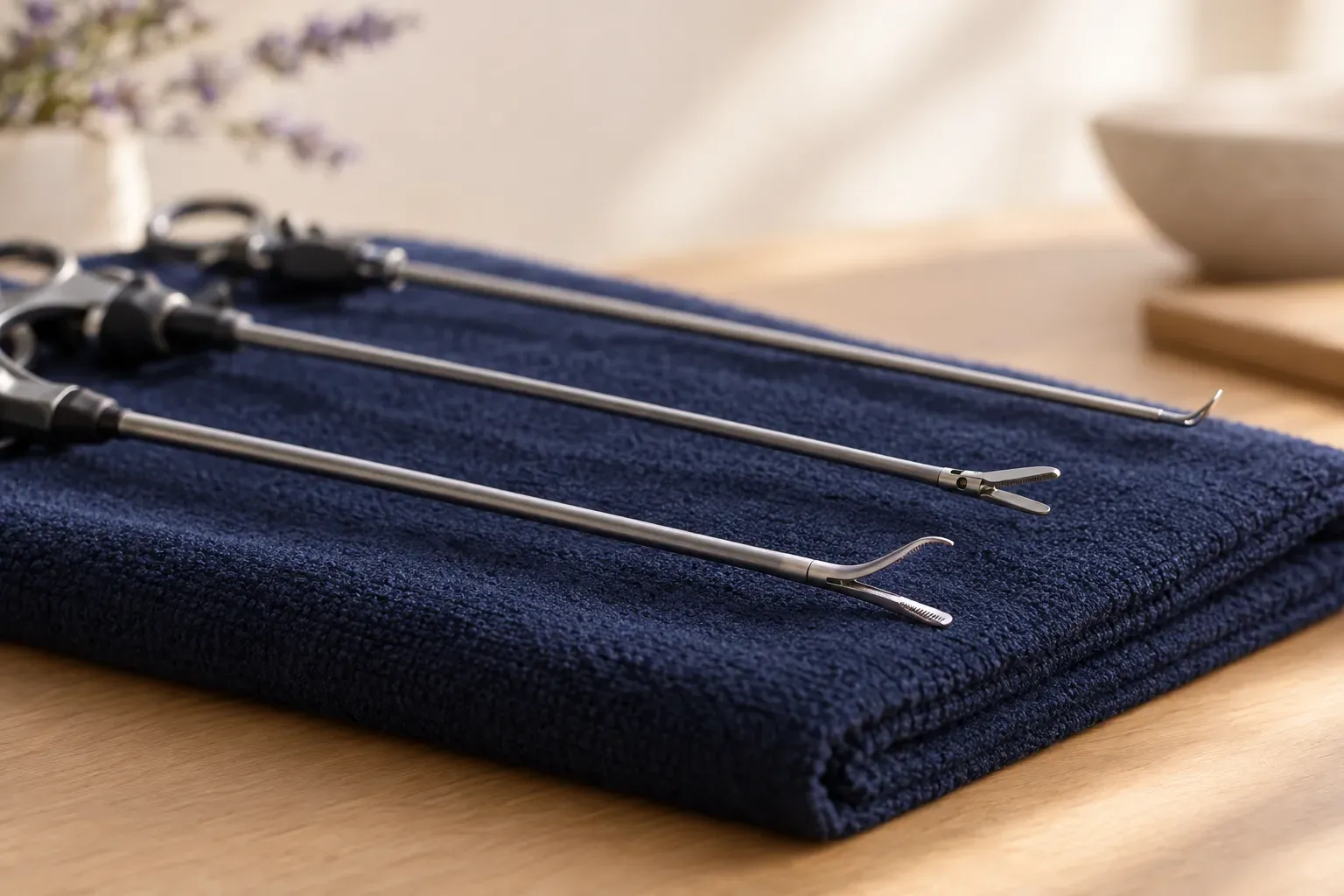
Removes the disease while sparing the bowel: shaved off the surface, a small disc cut out, or, only when it's needed, a short segment removed.
- Removes the nodules
- Yes
- Treats a narrowed bowel
- Yes, usually with a disc or a segment
Hormonal medication
Calms inflammation and eases pain for many, especially when symptoms follow the cycle, and is often used after surgery. Symptoms tend to return when it stops.
- Removes the nodules
- No, they stay in the bowel wall
- Treats a narrowed bowel
- No, it can't undo a narrowing
If you want to get pregnant
Bowel disease doesn't automatically mean infertility. Depending on pain, age and ovarian reserve, excision may come first, or IVF may, avoiding the recovery of bowel surgery.
Trying to conceive: bowel endometriosis and infertility, what to try first
Who treats it
Dr. Steven Vasilev, MD
Board-Certified Gynecologic Oncologist & Integrative Medicine Diplomate, Advanced Robotic Endometriosis Excision Surgeon, Director of Lotus Endometriosis Institute
Bowel endometriosis is where surgeons differ most. Dr. Vasilev is a gynecologic oncologist, trained and credentialed in bowel surgery, so he can shave, remove a disc or remove a segment, and choose what your bowel needs.
Patients often ask
Normal colonoscopy but bowel symptoms—could it be endometriosis?
Yes, endometriosis can still be a real possibility even if your colonoscopy was normal. Colonoscopy mainly checks the bowel’s inner lining, but bowel endometriosis more often lives on the outside or in deeper layers, where it can still cause bowel symptoms.
Can a CT scan detect bowel endometriosis?
Sometimes, but a CT scan is not reliable for diagnosing or ruling out bowel endometriosis. Many lesions won’t be visible, so evaluation typically relies more on symptoms, a targeted pelvic exam, and expertly interpreted ultrasound and/or MRI.
Can constipation be a sign of bowel endometriosis?
Yes, constipation can be a sign of bowel endometriosis, especially when it predictably flares before or during your period. It can result from effects on the bowel, adhesions or pelvic floor muscle spasm, but symptoms don’t reliably show how deep endometriosis is.
Can you get pregnant with bowel endometriosis?
Yes, many people with bowel endometriosis can still get pregnant. Bowel involvement doesn’t automatically mean infertility, but pelvic inflammation, adhesions, problems with the tubes or ovaries, and sometimes adenomyosis can affect conception.