

Deep infiltrating endometriosis
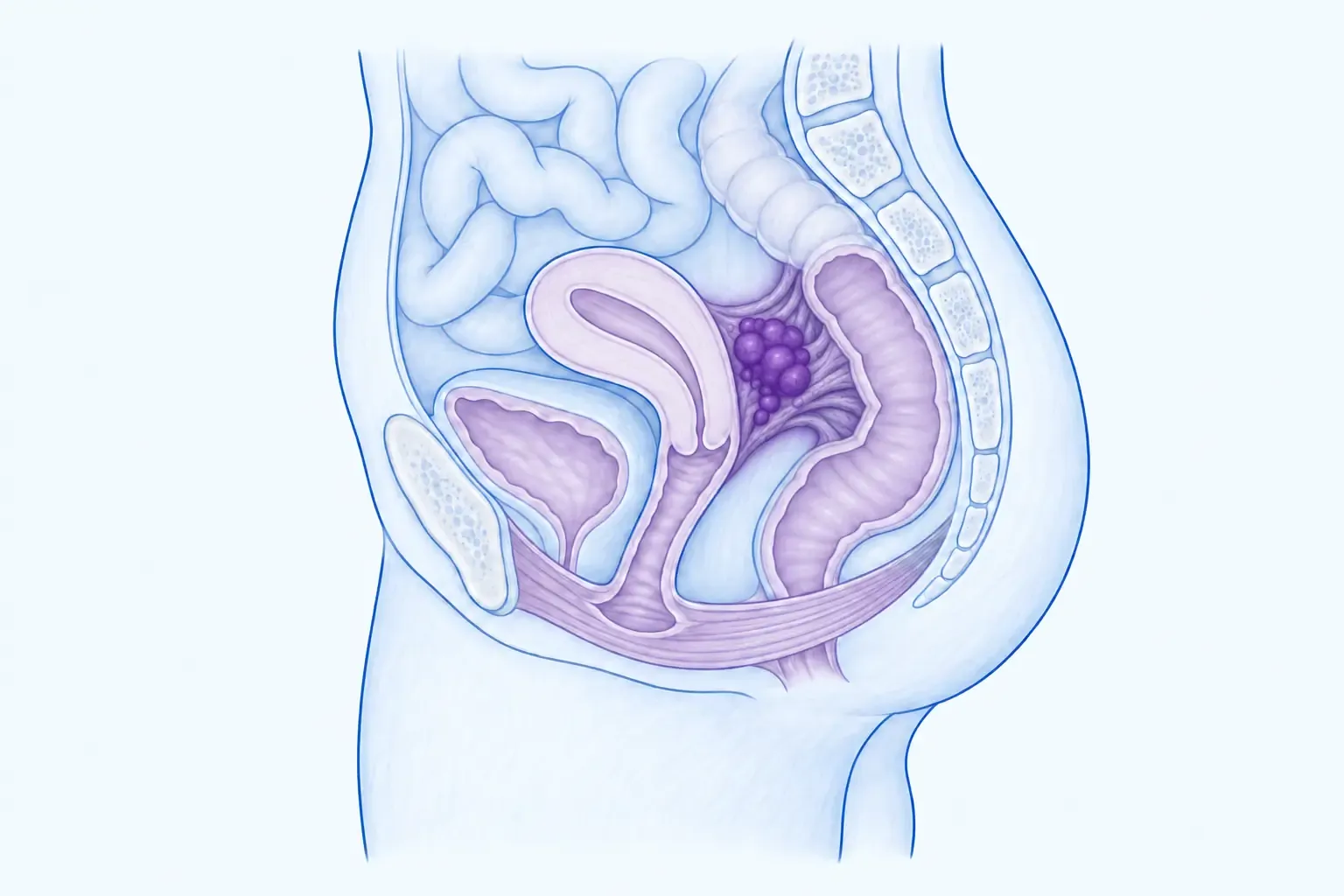
Endometriosis that grows more than 5 mm beneath the surface, often into the ligaments behind the uterus, the bowel, the bladder or the ureters.
Medically reviewed by Dr. Steven Vasilev, MD
Board-Certified Gynecologic Oncologist & Integrative Medicine Diplomate, Advanced Robotic Endometriosis Excision Surgeon, Director of Lotus Endometriosis Institute · Updated Nov 2026
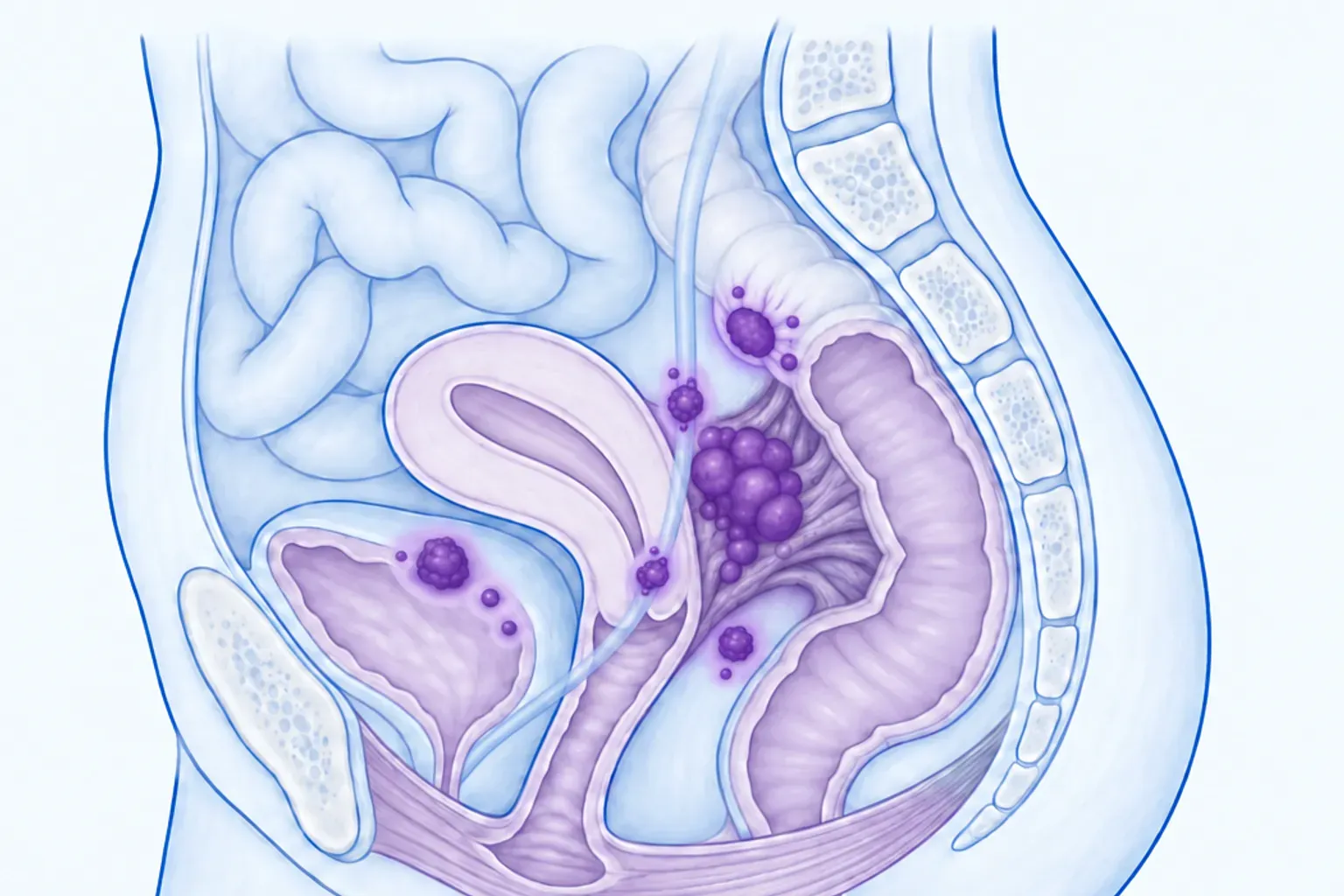
- Ligaments behind the uterusThe uterosacral ligaments, the most common site
- Between the vagina and rectumThe rectovaginal space
- The bowel wallUsually the rectum or sigmoid colon
- The bladderIts back wall or dome
- The uretersThe tubes from the kidneys, along the side walls
- Often missed
- and not well counted; deep disease hides from routine scans
- Expert imaging
- maps it: ultrasound or MRI read by a deep-disease expert
- Excision
- is the main treatment, planned organ by organ
The basics
What is it?
Endometriosis that grows deep into tissue rather than on its surface. It forms firm nodules and scar tissue that can tether organs together, pull on nerves, and narrow the bowel or a ureter.
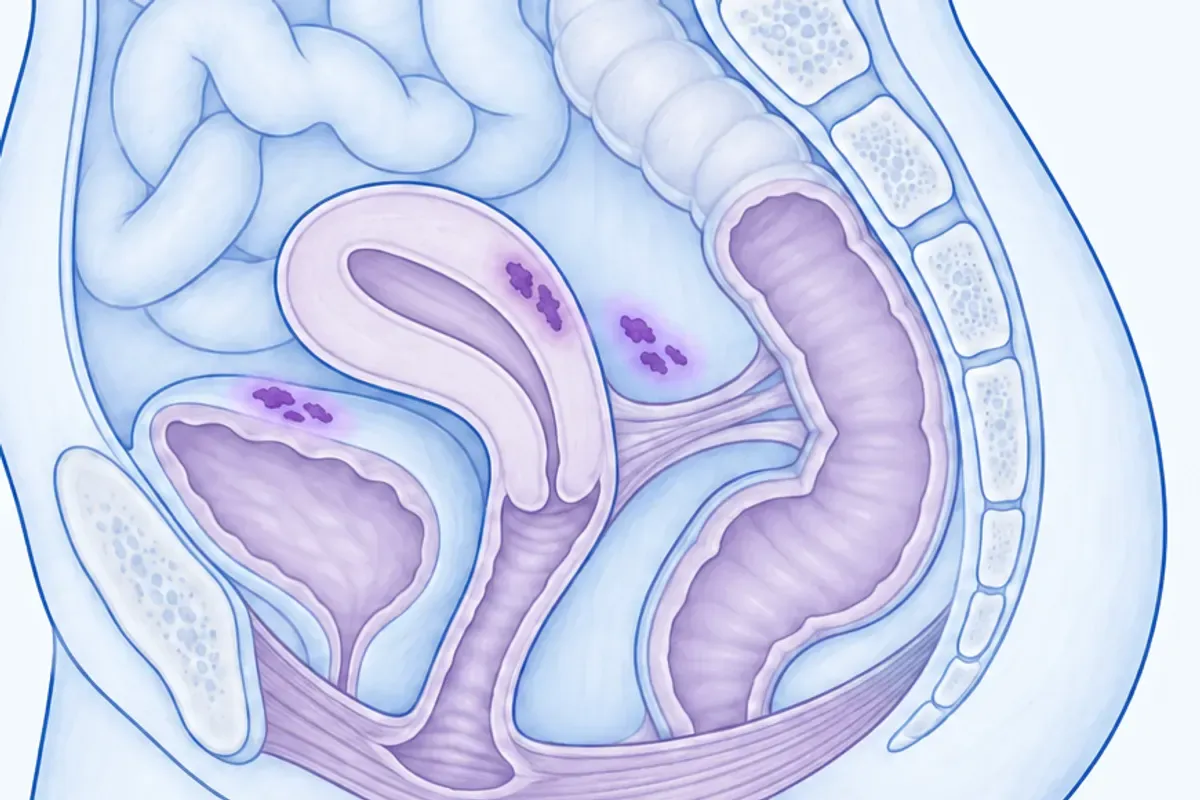
Superficial
Spots on the surface of the pelvic lining. The most common form.
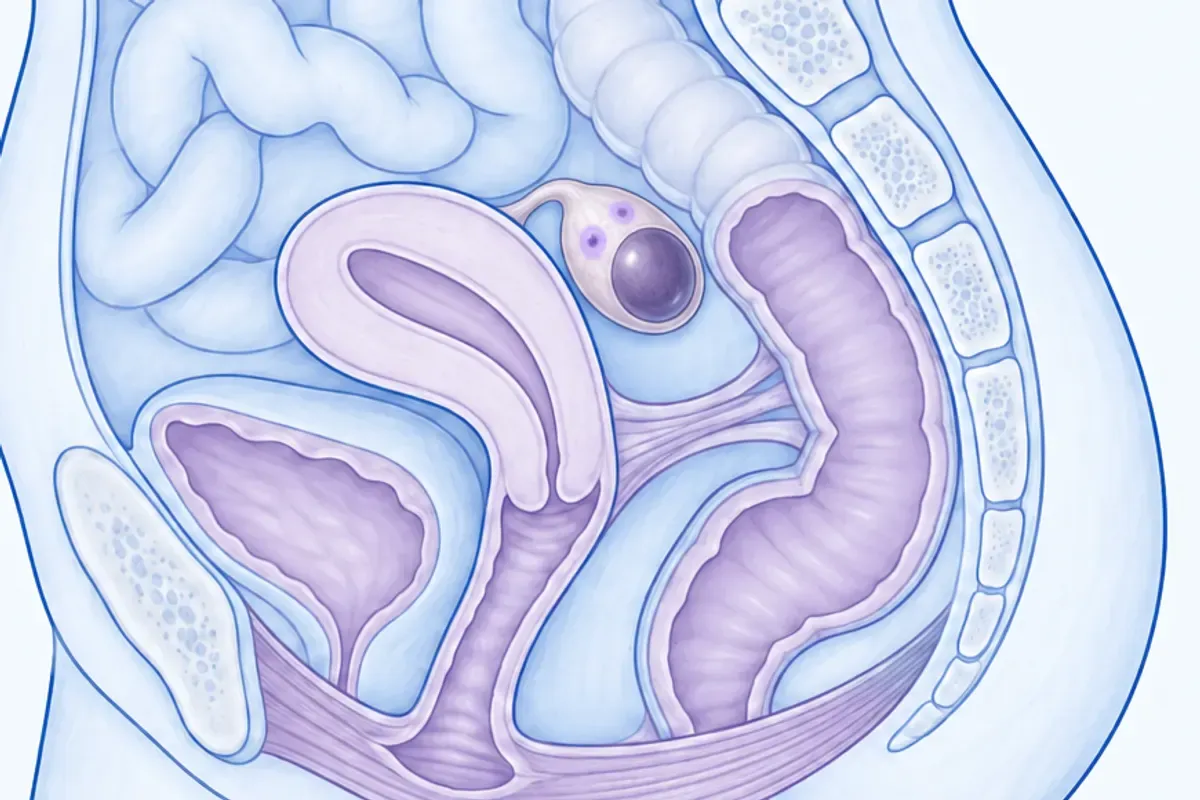
Endometrioma
A cyst in the ovary, sometimes called a chocolate cyst.
DeepThis page
Below the surface, into ligaments and organs. The form most likely to need specialist surgery.
Two things deep endometriosis is not
- It isn't measured by how much it hurts
Some people with extensive disease have manageable pain, and others have severe pain with less.
- It isn't always something an exam can feel
Especially when it sits higher up or deeper in, out of a finger's reach.

Symptoms
How does it show up?
Often with symptoms that don't sound gynecologic: pain with bowel movements, bladder symptoms, deep pain with sex.
What you feel depends on which structures are involved. Symptoms can follow your cycle, be there all the time, or both, and they're easily taken for IBS, bladder pain syndrome, repeated UTIs or a back problem.
- Painful periodsSevere cramps the usual measures don't touch, or that worsen over the years
- Pain during intercourseDeep pain with sex, often a sign of disease behind the uterus
- Painful bowel movementsPain passing stool, rectal pressure, or bleeding around your period
- ConstipationOr diarrhea, flaring around your period
- Urinary urgencyUrgency or frequency that follows the cycle
- Painful urinationPain as the bladder fills or empties
- Pelvic painPain between periods, not only during them
- Leg pain / sciaticaNerve-type pain when disease reaches the pelvic nerves
Disease on a ureter can cause few or no symptoms while it slowly narrows the tube that drains a kidney. That's one reason careful mapping matters when deep disease is suspected, even if urinary symptoms are mild or absent.
Diagnosis
How is it diagnosed?
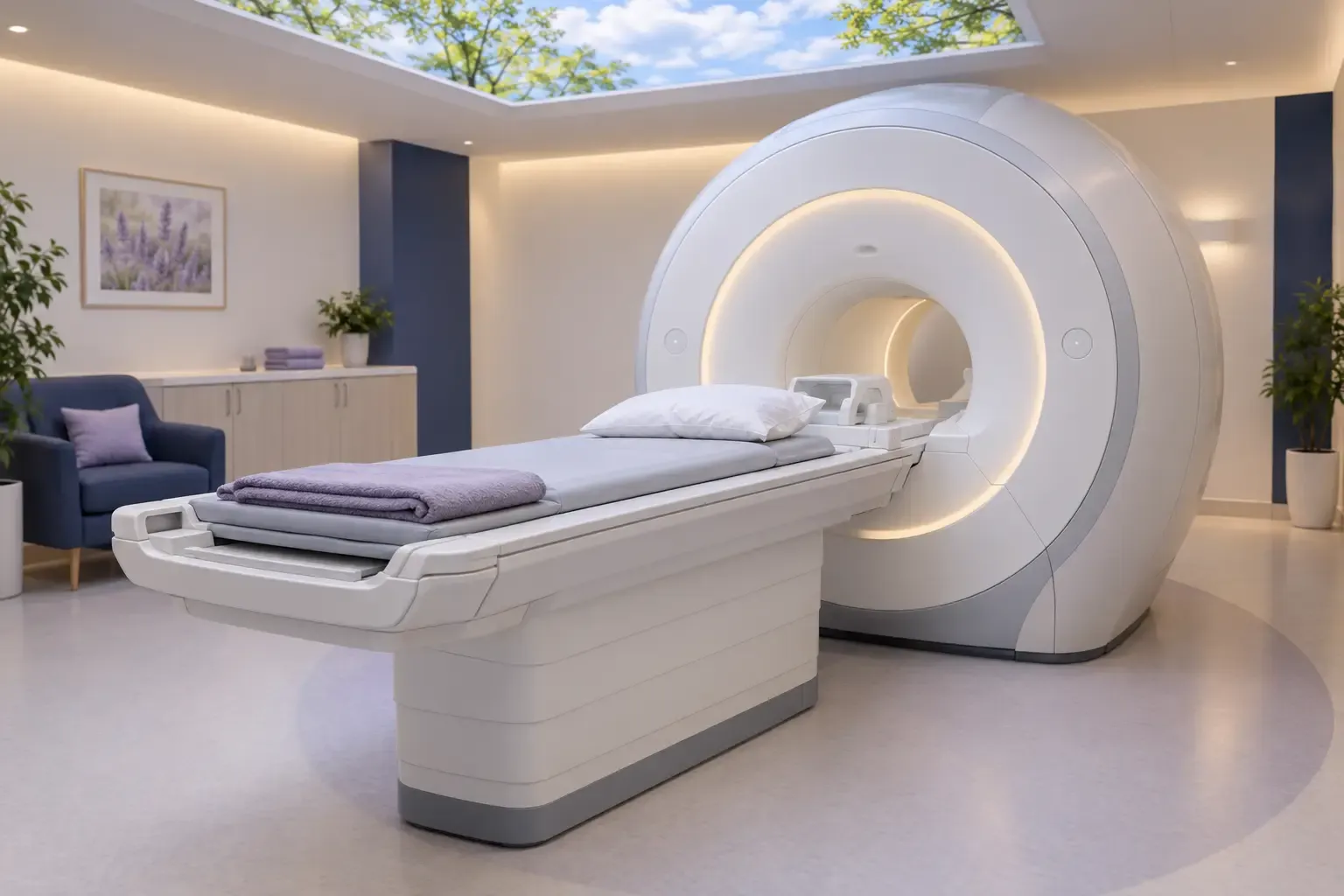
Expert imaging maps most deep disease before surgery. A normal routine scan doesn't rule it out, and sometimes only surgery can tell.
- Pelvic examAt the first visitCan find tenderness, thickening, and nodules low behind the cervix. Can miss disease higher up or deeper in.
- Expert transvaginal ultrasoundThe first mapCan show nodules, bowel involvement, and organs that don't slide freely over each other. It depends on who scans: a routine pelvic ultrasound isn't aimed at deep disease.
- MRITo plan surgeryShows how deep the disease goes and how it relates to the bowel, bladder and ligaments. Can miss small or flat lesions.
- SurgeryConfirms and treats itSees every lesion directly, confirmed by a pathologist, and treated in the same operation.
So the plan is mapped and agreed before the day, confirmed during the operation, and your consent covers everything that might be needed, so it doesn't stop halfway. Blood tests can't yet confirm or rule out deep endometriosis.
Treatment
What are the options?
Medication can ease symptoms but can't remove deep nodules. Excision surgery removes the disease, planned around every organ involved.
Excision surgery
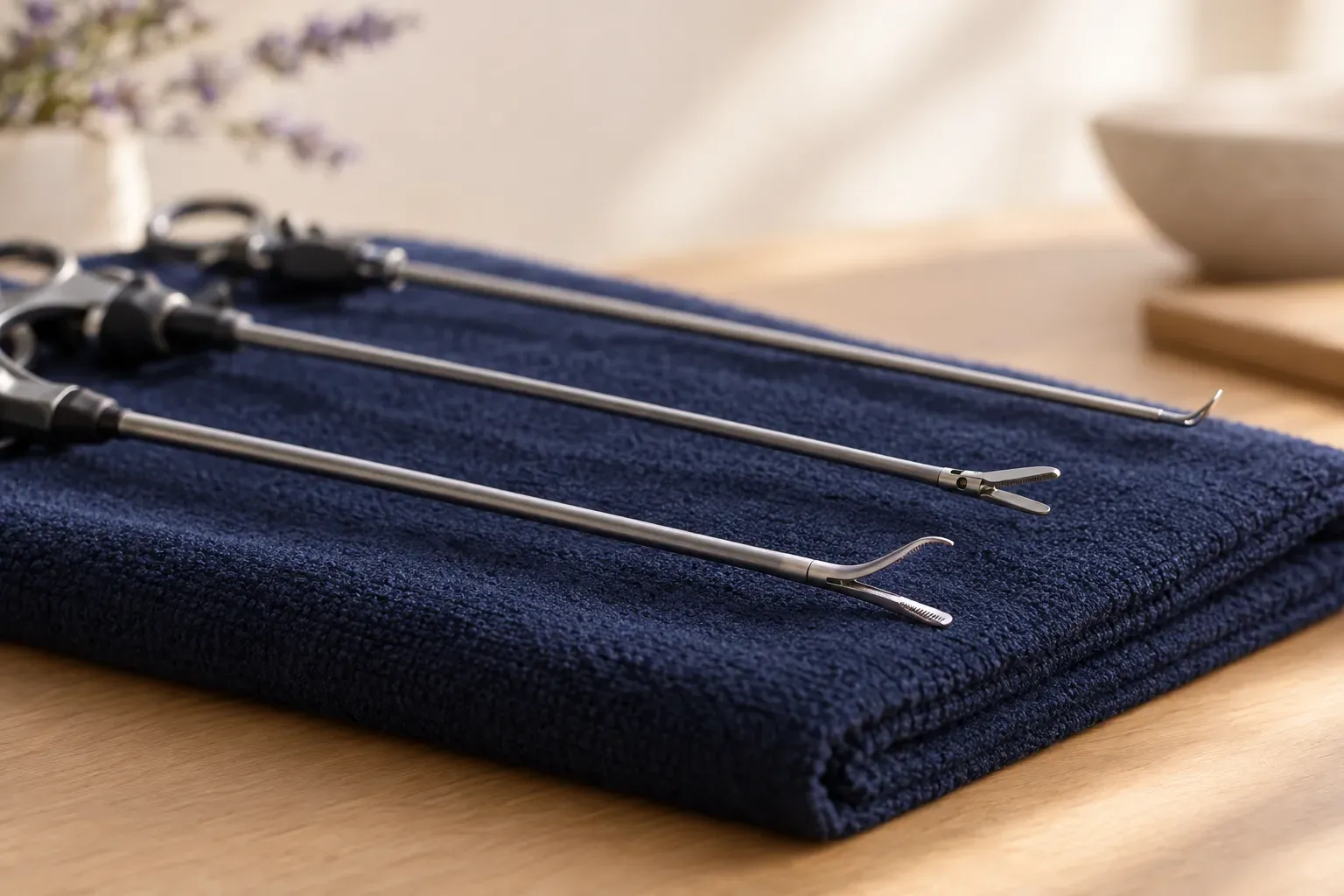
Cuts the disease out at its roots. Often right for deep disease that causes pain or affects an organ.
- Removes the nodules
- Yes
- Treats bowel, bladder, ureters
- Yes, in one planned operation
Hormonal medication
Quiets cycling and inflammation, which eases pain for many, before or after surgery. If pain persists on it, it's reasonable to reassess rather than push through.
- Removes the nodules
- No, they stay, with their scar tissue
- Treats bowel, bladder, ureters
- No, it can't undo a narrowing
If you want to get pregnant
Deep disease can distort the pelvis and limit how freely the tubes and ovaries move. Depending on age, ovarian reserve and timeline, excision may help, or it may make more sense to go straight to IVF.
Who treats it
Dr. Steven Vasilev, MD
Board-Certified Gynecologic Oncologist & Integrative Medicine Diplomate, Advanced Robotic Endometriosis Excision Surgeon, Director of Lotus Endometriosis Institute
Deep disease can reach the bowel, bladder, ureters or diaphragm. He treats it as one surgeon, in one planned operation: mapped before the day, confirmed during it.
Patients often ask
Can MRI reliably detect deep infiltrating endometriosis?
MRI can be very helpful for suspecting deep infiltrating endometriosis, especially when read by a radiologist experienced in endometriosis, but it is not a guaranteed yes/no test. A normal MRI does not reliably rule it out, and even deep disease can be missed.
How is deep infiltrating endometriosis different?
Deep infiltrating endometriosis penetrates deeper into tissues beneath the surface lining, rather than staying superficial. It often forms firm nodules and dense scarring, and is more likely to affect nearby organs like the bowel, bladder and ureters.
What surgery treats deep infiltrating endometriosis (DIE)?
The primary surgery for deep infiltrating endometriosis (DIE) is laparoscopic excision, sometimes with robotic assistance, to remove deep nodules. The goal is thorough removal while protecting nearby organs and pelvic nerves whenever possible.
Can medication alone treat deep infiltrating endometriosis?
Medication alone may reduce pain and bleeding-related symptoms from deep infiltrating endometriosis, but it does not remove deep lesions or scar tissue. Surgery is often part of definitive treatment if organs are affected or symptoms persist despite medication.