



Clearing Up Confusion in Endometriosis Care (Part 2)
Clarifying why treatment feels confusing—and what key guidelines actually recommend.
Understanding Endometriosis Treatment Confusion
Endometriosis affects millions of women worldwide and is characterized by pain, irregular menstruation, and infertility. This article is Part 2 in a series on this topic. It summarizes and comments on the findings from a 2021 review that provided a detailed analysis of international endometriosis treatment guidelines available as of September 2020.
Although discrepancies between guidelines are common in many diseases, endometriosis is notable for the degree of variation. A 2018 review revealed that only about 7% of recommendations were comparable across international guidelines, and up to 28% of the recommendations were not supported by good research evidence. These gaps help explain the wide variation in doctors’ recommendations in clinical practice.
The most recent publication examined key guidance from organizations including the American College of Obstetricians and Gynecologists (ACOG), the Society of Obstetricians and Gynaecologists of Canada (SOGC), the European Society of Human Reproduction and Embryology (ESHRE), the Australian National Endometriosis Clinical and Scientific Trials (ACCESS), the Royal College of Obstetricians and Gynaecologists (RCOG), the French National College of Gynecologists and Obstetricians (CNGOF), the American Association of Gynecologic Laparoscopists (AAGL), and the German Society for Gynecology and Obstetrics (DGGG).
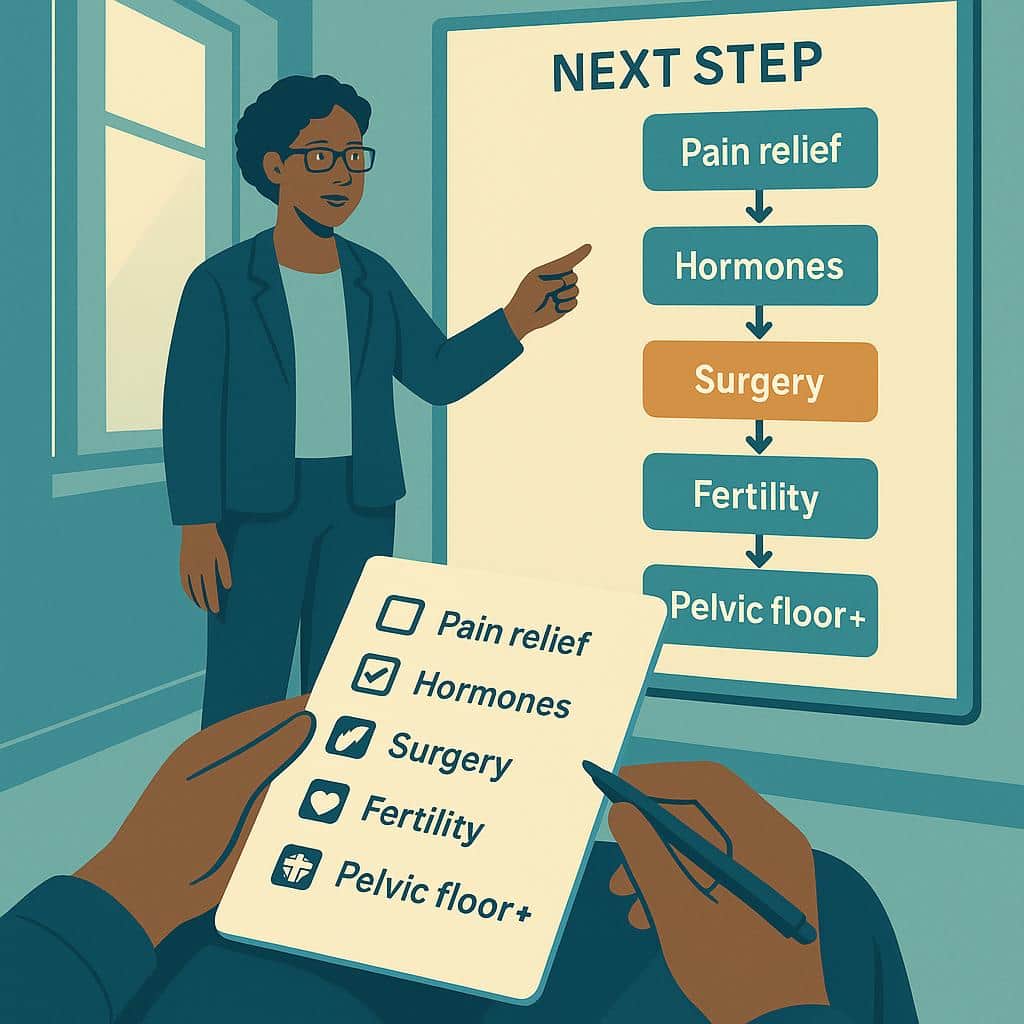
Across these guidelines, treatment considerations span non-hormonal pain management, hormonal therapies, surgical approaches, complementary and alternative options, infertility-related decisions, and emerging research. Many recommendations hinge on disease severity, patient goals such as fertility, and the skill and experience of the treating surgeon, particularly for deep infiltrating disease. While some therapies are broadly endorsed, others are limited by inconclusive evidence, side-effect profiles, or access and training requirements. The sections below synthesize the detailed guidance and points of agreement and disagreement.
Detailed Summary of Treatment Recommendations
Non-Hormonal Medical Pain Management
Nonsteroidal anti-inflammatory drugs (NSAIDs): Considered by all guidelines to be first-line therapy for dysmenorrhea and acyclic pelvic pain, but not specific for endometriosis. A diagnosis and targeted therapy is more prudent since a large review showed no difference in effectiveness between NSAIDs and placebo.
Get Clear on Your Treatment Options
Our specialists are here to help you understand your condition and explore your treatment options.
Schedule Your VisitHormonal Treatment Options
- Progestins and Combined Oral Contraceptives (COCs): Widely recommended for initial pain management, although specific formulations and dosages vary across guidelines. There is little mention of compounded micronized progesterone, which is hard to study but may deserve consideration. The Levonorgestrel Intrauterine System (LNG-IUS) is particularly noted for localized progestin delivery, reduced systemic side effects, and effective pain control.
- Megace (Megestrol Acetate): A potent progestin recommended by several guidelines, though its use varies as a first-line versus second-line option. An additional benefit is less bone loss than that seen with GnRH agonist therapy.
- GnRH Agonists: Uniformly recommended across guidelines for severe symptoms after first-line therapy. Potential side effects, which can be long-lasting, include decreased bone density and menopausal-like symptoms. Add-back low-dose estrogen therapy can reduce symptoms. Most guidelines, and the FDA, recommend durations of 6 months or less.
- Emerging Hormonal Therapies (GnRH Antagonists): Gaining attention for rapid onset of action and fewer side effects compared to agonists, though the evidence is not conclusive.
- Danazol and Gestrinone: Older treatments with androgenic effects and less common use today due to side effects. Gestrinone is not currently available in the United States.
- Selective Estrogen Receptor Modulators (SERMs) and Selective Progesterone Receptor Modulators (SPRMs): Emerging options being explored for targeted action and potential benefits.
- Aromatase Inhibitors: Considered in some cases, especially for pain unresponsive to other treatments. Most guidelines agree this is a possible second-line option, but the evidence is not conclusive. A possible niche for effective use may be in post-menopausal patients who have endometriosis.
Surgical Approaches: Navigating the Complexities
- Laparoscopic Surgery: Endorsed for efficacy and reduced recovery time compared to laparotomy. The extent of surgery (complete versus partial removal of lesions) varies among guidelines, and studies are likely hampered by differing surgeon skill sets.
- Robotic Surgery: Highlighted by AAGL and others for benefits in complex cases, though cost and accessibility limit widespread use. Specialized training is required.
- Ablation vs. Excision: The choice remains contentious. Ablation is simpler, requires less technical skill, and applies to superficial lesions, but it may not be as effective long-term as excision, which more comprehensively removes visible disease. Surgeon skill is critical, and high variability may affect the ability to prove or disprove the effectiveness and safety of each method.
- Endometrioma: Cystectomy or excision of endometriomas is superior to drainage in terms of lower recurrence. Excision provides the opportunity for pathologic confirmation, which can be important when the presence of a tumor is unclear. When fertility is a major concern, the more atraumatic the surgical approach, the less the ovarian reserve is affected; surgeon expertise is critical.
- Deep Infiltrating Endometriosis: Highly specialized excisional surgeries are recommended because ablation does not work for these lesions. There is an even stronger emphasis on the surgeon’s expertise and patient selection. Some strongly believe that the best outcomes for advanced cases with highly distorted anatomy may rest with robotic surgery in the hands of a master surgeon.
- Hysterectomy: Considered a “definitive” or last-resort surgery, but it may be helpful for complete excision of endometriosis at any point. It also allows removal of co-existing pain-producing adenomyosis embedded in the uterine wall.
- LUNA (laparoscopic uterine nerve ablation) and PSN (presacral neurectomy): Multiple reviews suggest no benefit to LUNA but a possible benefit for PSN in selected cases. PSN is technically very challenging and treatment should be individualized. Studies on LUNA include a mix of ablation and excision, resulting in a lack of precision and potential confounding by surgeon skill level; a definitive conclusion may be elusive until better study methodologies are employed.
Complementary and Alternative Therapies: Exploring Additional Avenues
- Acupuncture and Electrotherapy (TENS): Mentioned as adjunct therapies in some guidelines, with encouraging results but a need for more research. These are low-risk options.
- Nutritional Supplements: Some guidelines suggest dietary changes and supplements might play a role in symptom management, including microbiome management for optimal estrogen metabolism. Large randomized studies are unlikely due to impractical size requirements, but personalized molecular medicine is prompting exploration of alternative methodologies to determine which diet and lifestyle approaches may be most effective.
Infertility and Endometriosis: A Delicate Balance
Surgical vs. Non-Surgical Approaches: The decision to pursue surgery in infertility cases is complex and depends on individual factors such as age, severity of endometriosis, and prior treatments. Reducing inflammation appears to benefit intrauterine implantation and gestation.
Emerging Treatments and Research
Future Directions: Ongoing research into immunotherapies, new hormonal agents, and gene or molecular therapy offers promising avenues for more personalized strategies.
Final Thoughts
Endometriosis management is a highly dynamic field with evolving guidelines and currently discrepant recommendations due to incomplete or low-quality scientific evidence. Understanding current options is crucial for women to make informed decisions. Regular consultations with endometriosis experts, staying updated on new research, and considering a multidisciplinary, holistic approach can significantly improve quality of life.
References
Kalaitzopoulos, D. R. Samartzis, N. Kolovos, G. N. Mareti, E. Samartzis, E. P. Eberhard, M. Dinas, K. & Daniilidis, A. (2021). Treatment of endometriosis: a review with comparison of 8 guidelines. _BMC Womens Health_, _21_(1), 397. DOI: 10.1186/s12905-021-01545-5
Hirsch M, Begum MR, Paniz É, Barker C, Davis CJ, Duffy J. Diagnosis and management of endometriosis: a systematic review of international and national guidelines. BJOG. 2018;125(5):556–64. DOI: 10.1111/1471-0528.14838
Quick Answers
When is hysterectomy recommended for adenomyosis?
A hysterectomy is typically considered for adenomyosis when symptoms are severe and clearly uterus-driven—most often heavy bleeding (sometimes with anemia), intense cramping, pelvic pressure, and daily quality-of-life disruption—and you’re not planning future pregnancy. It’s the most definitive option because adenomyosis lives within the uterine muscle, so removing the uterus removes the source of the problem.
In practice, we usually weigh hysterectomy most strongly when conservative options haven’t brought acceptable relief, aren’t tolerated, or don’t fit your goals. The decision also depends on the pattern and extent of disease (diffuse adenomyosis versus a more focal adenomyoma that may be removable while preserving the uterus) and whether endometriosis may also be present. If endometriosis is part of the picture, it’s important to know that hysterectomy alone doesn’t treat disease outside the uterus—durable symptom relief depends on addressing all pain generators.
If you’re wondering whether you’re at the point where hysterectomy makes sense, our team can help clarify what’s most likely driving your symptoms, review imaging, and walk you through uterus-preserving versus definitive surgical paths so you can choose the option that best matches your relief and fertility priorities.
Why does ovarian cyst pain keep coming back?
Ovarian cyst pain can feel “recurrent” for a few different reasons. Some cysts are functional (they form with ovulation and then resolve), so the pain returns in a similar spot month after month even though it’s not the exact same cyst. In other cases, the cyst itself can come back or persist—especially if it’s an endometrioma (an ovarian cyst caused by endometriosis), which can behave differently than a simple cyst and may be associated with deeper pelvic disease.
Another common reason is that the cyst isn’t the whole story: endometriosis on the pelvic sidewall, uterosacral ligaments, bowel, bladder, or around the ovary can irritate the same nerves and tissues and make it feel like “my cyst is back” when the driver is actually inflammatory disease nearby. Adhesions (scar-like bands) can also tether the ovary and cause recurring pulling or sharp pain, even when imaging doesn’t show a large cyst. If your pain cycles, escalates, returns quickly after a “normal” ultrasound, or keeps recurring despite prior treatment, our team can help you map the pattern, interpret imaging with an endometriosis lens, and decide whether targeted evaluation and—when appropriate—excision surgery is the next best step.
Why do I have chronic fatigue and pelvic pain?
Chronic fatigue plus pelvic pain often feels “unexplainable” because it’s rarely caused by just one issue—and many of the most common drivers don’t show up on routine labs or a quick ultrasound. Endometriosis and adenomyosis can cause persistent pelvic pain, painful periods, bowel/bladder symptoms, and deep fatigue through inflammation, disrupted sleep, heavy bleeding (and possible iron deficiency), and the sheer energy cost of living with ongoing pain. It’s also common for more than one gynecologic condition to coexist—like fibroids, polyps, or benign cysts—so a single label may not fully match what you’re experiencing.
Another reason symptoms can persist is that the nervous system can become more pain-sensitive over time (often called central sensitization), meaning pain can spread, linger outside your cycle, or feel disproportionate to what imaging shows. In those cases, symptom relief alone can miss the bigger picture: we think in terms of both treating disease (for example, addressing endometriosis lesions or uterine drivers like adenomyosis/fibroids) and building a personalized pain-management plan so your body can “turn down the volume” on pain signals.
If your fatigue and pelvic pain have been brushed off or left without a clear plan, our team can help you sort through the likely contributors, including endometriosis/adenomyosis and common coexisting conditions, and map next steps that fit your goals. You can explore our educational resources on fatigue, chronic pelvic pain, and comprehensive treatment approaches, and reach out to schedule a consultation when you’re ready.
Why is my period pain so severe it disrupts my daily life?
Severe, life-disrupting period pain isn’t “normal cramps,” and it often points to an underlying driver that deserves a real explanation—not just symptom masking. One common cause is endometriosis, where tissue similar to the uterine lining grows outside the uterus and can irritate pelvic structures, trigger inflammatory chemicals, and sometimes involve organs like the bowel or bladder. Another key point is that pain severity doesn’t reliably match “stage,” so someone can have intense pain even if imaging looks normal or disease appears limited.
When period pain is severe, worsening over time, starts years after your first period, or comes with heavy bleeding, painful sex, bowel pain with periods, urinary pain, or fatigue, we think in patterns—because endometriosis and related conditions can overlap with pelvic floor dysfunction, nerve pain/central sensitization, GI dysbiosis, vascular issues, or adenomyosis. Our approach is to take your full timeline and flare pattern seriously and then tailor evaluation with careful exam and expertly interpreted imaging when helpful. If your pain is disrupting school, work, relationships, or daily functioning, reach out to schedule a consultation—our team can help you identify what’s driving it and map out a plan aimed at lasting relief.
Is uterine artery embolization (UAE) right for adenomyosis?
Uterine artery embolization (UAE)—sometimes called adenomyosis embolization—can be a good fit when your main goal is symptom relief while preserving the uterus, especially if heavy bleeding and uterine “bulk” symptoms are a big part of your day-to-day. It’s a radiology procedure that reduces blood flow to targeted uterine tissue with the aim of shrinking or calming adenomyosis-related changes. Many patients do report meaningful improvement in quality of life after UAE, and the recovery is typically shorter than major surgery.
Whether it’s “right” depends on what you’re trying to solve (bleeding, pain, fertility, or all three) and whether adenomyosis is the primary driver of your symptoms—or if endometriosis is also part of the picture. In head-to-head research in people with MRI-confirmed, therapy-resistant adenomyosis who were eligible for hysterectomy and not trying to conceive, both UAE and hysterectomy improved quality of life at 1 year, but hysterectomy tended to have an advantage for pain relief and satisfaction. If you want the most definitive option for uterus-driven symptoms, hysterectomy is the clearest “source removal” treatment, while UAE is better viewed as a uterus-preserving option that may help substantially but isn’t guaranteed to be as durable.
If you’re weighing UAE, our team can help you clarify your diagnosis (including whether endometriosis may be contributing), review your imaging and goals, and map out a plan that matches the level of relief you need—now and long-term. Explore our adenomyosis care resources, and reach out to schedule a consultation if you want a personalized decision pathway.