


Endometriosis in Menopause: Expert Guidance & Insights
Evidence-based strategies for symptom control, HRT decisions, and whole-person support in menopause
What Would Happen to the Signs and Symptoms of Endometriosis After Menopause?
There is still much unknown about endometriosis after menopause. Some studies have shown that the severity of symptoms may lessen with age, while others have found that endometriosis can worsen after menopause, especially when adenomyosis of the uterus persists for decades into the menopausal years. For many, managing symptoms becomes a lifelong process. If you experience pelvic pain or intestinal symptoms near or after menopause that may be related to endometriosis, it’s important to talk to your doctor about options for accurate diagnosis and treatment.
Managing Endometriosis During Menopause
Whether symptoms reflect ongoing disease or the effects of prior treatment, scarring is one of the normal processes the body uses to heal. Persistent active endometriosis or adenomyosis, as well as scars or fibrosis affecting various organs and the peritoneum, can cause ongoing symptoms. Even without taking estrogen replacement and with a known history of endometriosis, estrogen still exists in the body in varying amounts because fat cells convert other hormones or toxins into estrogen. The amount of estrogen required to drive endometriosis growth varies between individuals, and estrogen is not the only molecular driver behind endometriosis. For these reasons, pain from endometriosis persists into menopause in at least 2–5% of patients. Treatment approaches overlap regardless of why symptoms are present, but they are not exactly the same for every situation.
Reducing the Severity of Endometriosis Symptoms During Menopause
Surgery remains part of the discussion because accurate blood-test biomarkers are still not available. Whether symptoms are due to persistent or newly developing endometriosis, scarring from endometriosis healing, or progressive scarring from prior excisions, expert evaluation for possible surgical intervention should be a cornerstone of planning. A risk–benefit discussion with an experienced surgeon helps determine what is going on after menopause and can guide a tailored plan that may involve excision of endometriosis, treatment of scar tissue, or even possible hysterectomy. If persistent adenomyosis is the cause of pain, surgery may be the most effective option to eliminate symptoms.
If active endometriosis is responsible, symptom severity may be reduced through general adjustments that include diet and lifestyle modifications. Reducing stress with calming activities such as yoga or meditation, eating an anti-inflammatory diet high in fiber to help absorb excess estrogen in the gut, and engaging in regular physical activity can help ease endometriosis pain for some. These recommendations depend on what else may be going on, such as small intestinal bacterial overgrowth (SIBO) or irritable bowel syndromes.
The following are some specific considerations.
Taking Hormone Replacement Therapy (HRT)
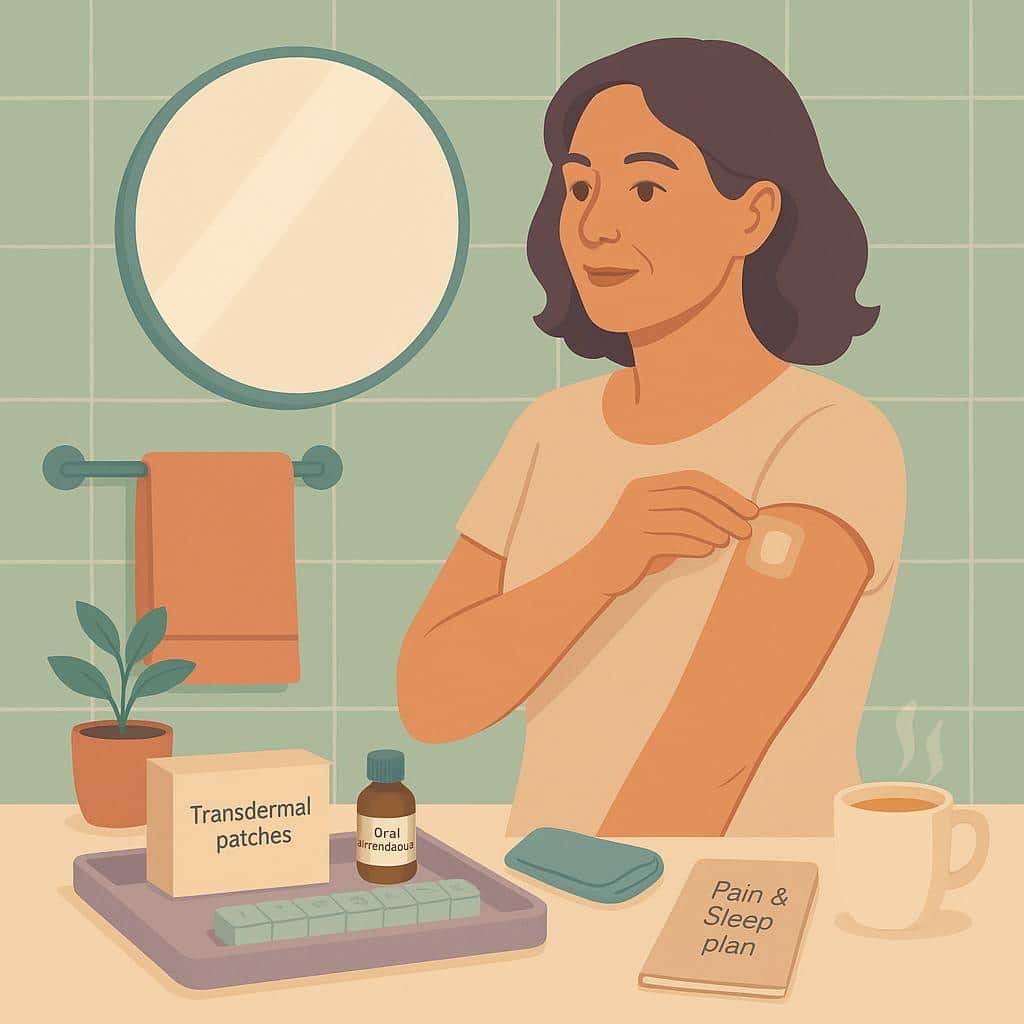
Taking hormone replacement therapy (HRT) is an important treatment decision. HRT uses hormones to relieve menopausal symptoms. If the uterus is still present, both estrogen and progesterone are required to reduce the risk of uterine cancer. If not, estrogen replacement therapy (ERT) alone may be better because it is associated with a lower risk of developing breast cancer. It remains controversial whether HRT or ERT can make endometriosis grow; available scientific data suggest that HRT may be preferable in this regard, but the issue is not clear-cut. It is also unclear whether herbal or plant-based estrogen replacement is safe, and based on complex molecular biology factors, the effects are probably different for each individual. The body is never in a zero-estrogen state because fat cells convert other hormones into estrogen, and toxins encountered in daily life (xenoestrogens) can also play a role.
Manage Menopause Symptoms with Expert Help
Our specialists are here to help you understand your condition and explore your treatment options.
Schedule Your AppointmentTaking Pain Relievers Like Ibuprofen or Acetaminophen
Over-the-counter pain relievers such as ibuprofen or acetaminophen may be effective for intermittent mild to moderate endometriosis pain. Side effects are usually mild but should be weighed against the benefits of longer-term use. A pain specialist may recommend stronger medications such as narcotics, gabapentin, or related drugs, but continuous use is generally not recommended. Relying solely on pain medications is like putting a bandage on a significant wound without repairing the underlying problem. A better strategy is to identify and address the root cause. Determining whether pain in menopause is endometriosis- or adenomyosis-related may require expert evaluation, and this topic has been explored in the literature.
Reducing Stress with Relaxation Techniques like Yoga or Meditation
Yoga and meditation have been shown to effectively reduce stress levels, which may lessen endometriosis-related symptoms. The mechanisms are not fully understood but may involve alterations in cortisol levels or epigenetic regulation of gene expression related to pain receptors. This area is subjective and challenging to study objectively, and research is ongoing. Because these practices carry minimal risk and can benefit overall health in multiple ways, they are reasonable options to consider.
Exercising Regularly
Regular exercise supports physical and mental health at any age. For people with endometriosis, physical activity can help reduce inflammation and modulate the body’s response to pain. Studies indicate that consistent workouts may help manage endocrine problems, anxiety, and stress levels. Exercise is also associated with improved sleep quality, making it a low-risk lifestyle modification with multiple potential benefits.
Pelvic Floor Therapy
Inflammation from endometriosis and/or direct nerve impingement at the pelvic floor can cause pain in menopause, similar to what many experience during the reproductive years. The muscles and fascia may overreact and spasm, and pelvic floor physical therapy can be used to address these issues. In some cases, this approach helps with fibrosis or scar-related pain by restoring normal motion. Typically, it requires a structured program rather than a single session, so a consultation with a pelvic floor therapist is worth considering. Pelvic floor therapy may or may not be the solution for a given individual; if pain persists, surgical options may still need to be considered to reach the root of the problem.
Don’t Suffer with Prolonged Severe Symptoms
After menopause, many people find that endometriosis and related symptoms still significantly affect daily life, even with prudent diet and lifestyle modifications. If this describes your situation, speak with an expert about the potential benefits and risks of surgery and other available treatments. Molecular markers for endometriosis may be on the horizon, but today surgery is the only way to accurately diagnose endometriosis. Especially when pain persists into menopause (https://www.ncbi.nlm.nih.gov/pmc/articles/PMC7151055/) or begins during menopause, other conditions may be responsible, or endometriosis may overlap with adenomyosis. Surgical treatment may or may not be the right answer, but expert guidance and a complete evaluation are preferable to waiting and hoping the pain will resolve on its own.
Quick Answers
When is hysterectomy recommended for adenomyosis?
A hysterectomy is typically considered for adenomyosis when symptoms are severe and clearly uterus-driven—most often heavy bleeding (sometimes with anemia), intense cramping, pelvic pressure, and daily quality-of-life disruption—and you’re not planning future pregnancy. It’s the most definitive option because adenomyosis lives within the uterine muscle, so removing the uterus removes the source of the problem.
In practice, we usually weigh hysterectomy most strongly when conservative options haven’t brought acceptable relief, aren’t tolerated, or don’t fit your goals. The decision also depends on the pattern and extent of disease (diffuse adenomyosis versus a more focal adenomyoma that may be removable while preserving the uterus) and whether endometriosis may also be present. If endometriosis is part of the picture, it’s important to know that hysterectomy alone doesn’t treat disease outside the uterus—durable symptom relief depends on addressing all pain generators.
If you’re wondering whether you’re at the point where hysterectomy makes sense, our team can help clarify what’s most likely driving your symptoms, review imaging, and walk you through uterus-preserving versus definitive surgical paths so you can choose the option that best matches your relief and fertility priorities.
Is uterine artery embolization (UAE) right for adenomyosis?
Uterine artery embolization (UAE)—sometimes called adenomyosis embolization—can be a good fit when your main goal is symptom relief while preserving the uterus, especially if heavy bleeding and uterine “bulk” symptoms are a big part of your day-to-day. It’s a radiology procedure that reduces blood flow to targeted uterine tissue with the aim of shrinking or calming adenomyosis-related changes. Many patients do report meaningful improvement in quality of life after UAE, and the recovery is typically shorter than major surgery.
Whether it’s “right” depends on what you’re trying to solve (bleeding, pain, fertility, or all three) and whether adenomyosis is the primary driver of your symptoms—or if endometriosis is also part of the picture. In head-to-head research in people with MRI-confirmed, therapy-resistant adenomyosis who were eligible for hysterectomy and not trying to conceive, both UAE and hysterectomy improved quality of life at 1 year, but hysterectomy tended to have an advantage for pain relief and satisfaction. If you want the most definitive option for uterus-driven symptoms, hysterectomy is the clearest “source removal” treatment, while UAE is better viewed as a uterus-preserving option that may help substantially but isn’t guaranteed to be as durable.
If you’re weighing UAE, our team can help you clarify your diagnosis (including whether endometriosis may be contributing), review your imaging and goals, and map out a plan that matches the level of relief you need—now and long-term. Explore our adenomyosis care resources, and reach out to schedule a consultation if you want a personalized decision pathway.
How does estrogen affect the endometrium?
Estrogen is one of the main hormones that drives endometrial growth. In the first half of the menstrual cycle, rising estrogen signals the endometrium to thicken and rebuild after a period, preparing the uterus for a possible pregnancy. It also influences the local immune and inflammatory environment in the uterus, which is part of why hormonal shifts can change bleeding patterns and pain.
When estrogen’s growth signals are strong—and progesterone’s “calming” effect is weaker than expected (often described as progesterone resistance)—the endometrium can behave in a more persistently inflamed, reactive way. This hormone–inflammation pattern is especially relevant in estrogen-dependent conditions like adenomyosis and endometriosis, where tissue similar to the endometrium can contribute to ongoing symptoms. If you’re trying to make sense of heavy bleeding, severe cramping, or cycle-linked pelvic pain, our team can help you connect the hormonal biology to what you’re feeling and review next steps for diagnosis and treatment.
What causes estrogen dominance with endometriosis?
“Estrogen dominance” in endometriosis usually isn’t just about making too much estrogen overall—it’s more often about an estrogen-favoring environment in the pelvis and within the lesions themselves. Many endometriosis lesions can produce estrogen locally (for example, through higher aromatase activity), and that local estrogen can help lesions survive, inflame surrounding tissue, and stimulate nerve growth that drives pain. At the same time, endometriosis commonly behaves as a chronic inflammatory condition, and inflammation can reinforce estrogen signaling and keep the cycle going.
Another key piece is that endometriosis often shows a weaker response to progesterone (“progesterone resistance”), so the normal hormonal braking system that should counterbalance estrogen doesn’t work as well. This can make symptoms feel very hormone-driven even when blood hormone labs look “normal.” Because endometriosis is multifactorial and likely includes different subtypes, the specific drivers of estrogen dominance can vary from person to person—genetics/epigenetics, immune dysfunction, and tissue-level changes can all play a role. If you’re trying to make sense of your symptoms or why hormonal suppression hasn’t brought lasting relief, our team can help you sort out what may be driving your disease and discuss options that focus on treating the endometriosis itself, not just temporarily quieting it.
How long does pelvic floor therapy take to help endometriosis?
Most patients don’t feel a dramatic change after one visit—pelvic floor therapy for endometriosis tends to build over time. When symptoms are being driven by pelvic floor overactivity, protective muscle guarding, and nerve sensitization, early sessions often focus on assessment, calming pain signaling, and learning strategies your body can tolerate. Many people notice the first meaningful shifts over several weeks as muscles start to relax and coordination improves, especially for pain with sex, bladder/bowel symptoms, and daily pelvic tension.
How long it takes overall depends on what’s keeping your pain “switched on”—active disease, adhesions, central sensitization, posture/movement compensations, or a mix. If endometriosis lesions are still a major pain generator, therapy can still help reduce pelvic floor spasm and improve function, but it may work best as part of a broader plan that also addresses the disease itself. In our practice, we often use pelvic floor therapy as a complement before and/or after excision (when indicated) to support recovery, improve comfort with exams or intimacy, and reduce the odds that muscle and nerve patterns keep pain going. If you’d like, our team can help you figure out whether pelvic floor dysfunction is a key driver of your symptoms and what a realistic therapy timeline could look like for you.