



MCAS and Endometriosis Pain: What Research Suggests So Far
How mast cells may amplify pelvic pain, flares, and “sensitization”—and what to discuss with your doctor
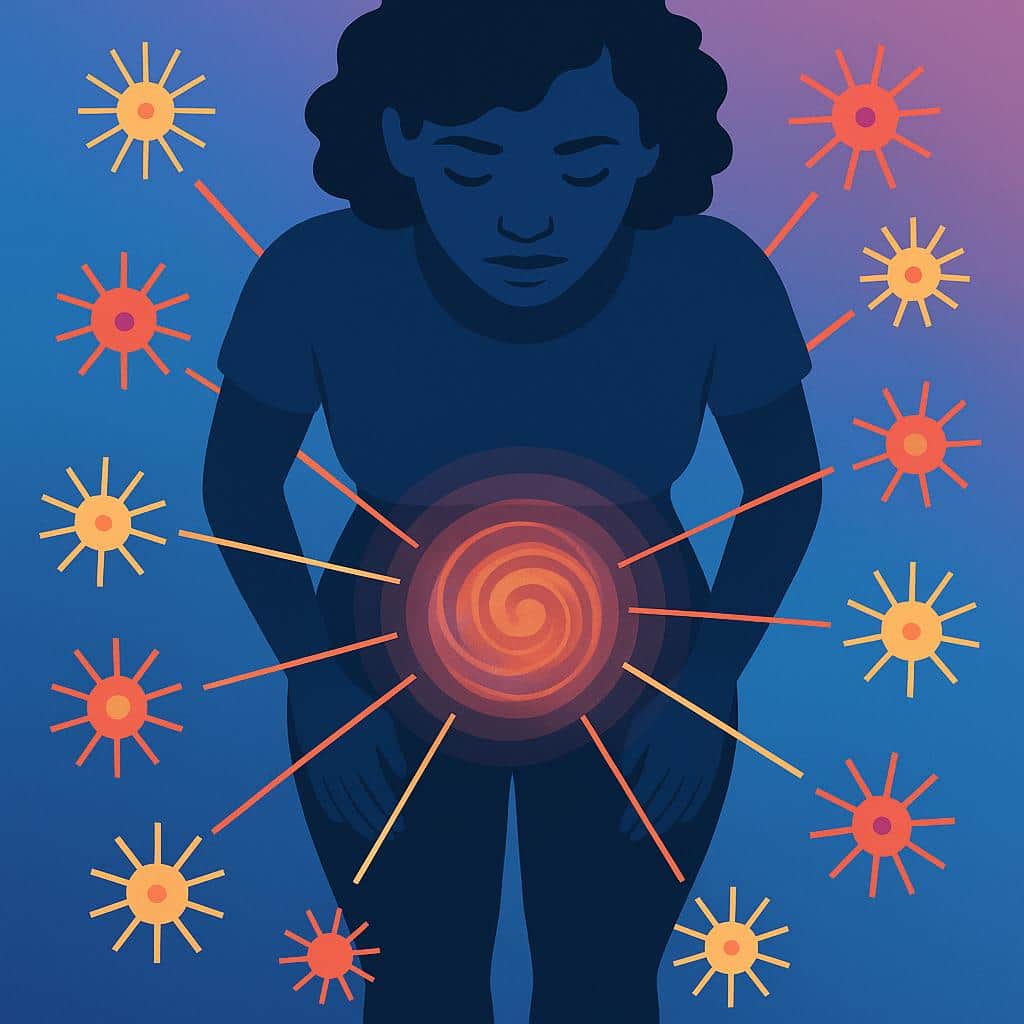
Endometriosis doesn’t always “make sense”: pain that feels out of proportion to what imaging shows, pain that persists after surgery, or flares that seem tied to stress, hormones, certain foods, or allergies. It’s also common to have overlapping issues like IBS-type bowel symptoms, migraines, or dizziness and fast heart rate that can resemble POTS.
This has led to increasing searches for mast cell activation syndrome (MCAS) and its possible connection to endometriosis. MCAS is a condition characterized by episodes of mast-cell mediator release (think histamine and many other inflammatory chemicals), leading to multi-system symptoms. While MCAS is still an evolving diagnosis and not every patient with endometriosis has MCAS, multiple recent research papers are converging on a related idea: mast cells may be an important “switchboard” between hormones, immune inflammation, nerves, and pain processing in endometriosis.
Drawing from recent reviews and mechanistic studies, here’s what the combined evidence suggests—and what it does not yet prove.
First: what mast cells have to do with pain (not just allergies)
Mast cells are immune cells best known for allergic reactions, but they also live in tissues throughout the body—especially near nerves and blood vessels. When activated, they can release mediators such as histamine, tryptase, cytokines, and growth factors. Those substances can:
- Irritate and sensitize nearby pain-sensing nerves (nociceptors)
- Promote nerve growth and “rewiring” in tissues
- Increase inflammatory signaling that keeps the system activated
- Potentially contribute to longer-term changes in how the spinal cord/brain processes pain (often described as central sensitization)
In endometriosis, two separate 2025 reviews (in Frontiers in Immunology and the International Journal of Biological Sciences) highlight mast cells as potential coordinators of a neuro-immune loop: immune activation feeds nerve sensitization, and nerve activity can, in turn, reinforce inflammation.
This matters because it offers a plausible explanation for why endometriosis pain can feel “neuropathic” (burning, stabbing, radiating), can spread beyond the pelvis over time, and can persist even when lesions are treated.
Is MCAS the same thing as “mast cells in endometriosis”?
Not exactly. MCAS is a systemic syndrome; endometriosis is more of an abdominal-pelvic disease (though it certainly does have body-wide effects). The current research doesn’t say “endometriosis = MCAS.” What it does support is a narrower, but still important, point: mast cell activation inside and around endometriosis lesions may contribute to pain, and in some people that local biology may overlap with systemic mast-cell-type symptoms.
So if you’re exploring mast cell activation syndrome and endometriosis together, it can help to think in two layers:
- Local mast cell activity in lesions and pelvic tissues that may amplify pelvic pain.
- Systemic sensitivity (possible MCAS or mast-cell–leaning physiology) that may intensify flares, trigger multi-system symptoms, and lower pain thresholds.
What the evidence says about mast cells inside endometriosis lesions
Across the recent reviews, researchers repeatedly point to findings seen in both human tissue studies and animal models: mast cells are often more numerous and more activated (degranulated) in endometriosis lesions, and they tend to cluster near nerve fibers.
A 2023 study in Frontiers in Immunology adds more detailed support to that picture. In ovarian endometriotic lesions, the investigators reported higher levels of mast-cell markers and identified mast cells that were positive for a membrane estrogen receptor called GPR30. Importantly for patients, they also found that mast-cell-related markers were higher in lesions from people reporting pain compared with those not reporting pain, and mast cells were more frequently positioned close to nerve structures in the pain group.
This doesn’t prove mast cells are the only cause of pain—but it strengthens a consistent theme across papers: endometriosis pain may be partly “wired into” the lesion environment, not purely determined by lesion size or location.
How estrogen may trigger mast-cell-driven pain sensitization
Many patients notice hormonal patterns in pain—worse symptoms around ovulation or before a period, or changes when starting/stopping hormonal medications. The mast-cell literature provides one possible biological explanation for why estrogen can change pain beyond simply “feeding lesions.”
A 2025 review focusing on mast cells and estrogen-induced pain sensitization describes how estrogen can activate mast cells through estrogen receptors (including non-classical pathways). The 2023 mechanistic study goes further and proposes a specific chain:
Estradiol → GPR30 activation on mast cells → release of FGF2 → increased nerve growth/sensitivity → more pain-like signaling
In that study, estradiol increased production of FGF2 (a growth factor) in mast cells via a MEK/ERK pathway. Lab experiments suggested FGF2-rich mast-cell secretions could promote neurite outgrowth and activation in nerve-like cells. In a rat endometriosis model, blocking the interaction between FGF2 and its receptor (FGFR1) improved pain-like behaviors.
For patients, the key takeaway is not that an FGF2 blocker is ready for clinical use (it isn’t, based on these papers which are pre-clinical in rat models which are not great for endo). The key takeaway is the concept that needs to be further explored in humans: hormones may worsen pain partly by activating immune cells that directly sensitize nerves, which could help explain why some people still have significant pain even when lesion burden is modest—or why pain can flare quickly with hormonal shifts.
Why pain can persist after excision: “neuroinflammation” and central sensitization
Many patients feel dismissed when they’re told, “Your surgery looked good, so you shouldn’t still hurt.” But the current science increasingly frames endometriosis pain as involving neuroinflammation—changes not only in pelvic tissues, but also in the nerves, dorsal root ganglia, spinal cord, and even brain-level processing. There can also be anatomic and fibrotic impact on nerves which falls under the umbrella of neuropelveology, which adds another layer of possibilities if disease that directly compressed nerves was not recognized or not addressed well with an excision surgery.
A 2025 review in Frontiers in Immunology emphasizes that endometriosis-associated pain likely involves multi-level nervous system changes, not only local pelvic inflammation. The paper highlights how inflammatory mediators reported in lesions and pelvic fluid—such as TNFα, interleukins, prostaglandins, NGF, and chemokines—can stimulate and sensitize sensory nerves. It also discusses evidence that nerve fiber density near lesions can be higher and may correlate with pain.
This helps connect several patient experiences:
- Pain that outlasts lesion removal: if nerves have been sensitized for months/years, they may continue to overreact even after the original trigger is reduced.
- Widespread pain or multiple pain sites: central sensitization can lower the threshold for pain in other regions.
- Flares with stress or poor sleep: the nervous system’s “alarm settings” can be influenced by stress hormones and autonomic activation.
So, in people who may have mast-cell-driven flares (whether diagnosed MCAS or not), repeated mediator release could, in theory, keep feeding the nervous system and perpetuating sensitization—making pain harder to “turn off” with surgery alone.
Struggling with Endo Pain & MCAS?
Our specialists are here to help you understand your condition and explore your treatment options.
Book Your ConsultationAutonomic symptoms, visceral hypersensitivity, and overlapping conditions (IBS, migraine, POTS)
The papers provided focus mainly on mast cells, estrogen signaling, nerve sensitization, and neuroinflammation in endometriosis—not on IBS, migraine, or POTS specifically. Still, the framework they describe can help patients make sense of common "comorbidity" patterns:
- Visceral hypersensitivity: Mast cell mediators (especially histamine, but also cytokines and growth factors) can make visceral nerves more reactive. If pelvic nerves are already sensitized, bowel and bladder sensations may be interpreted as pain more easily, complicating the “Is this endo or IBS?” question.
- Migraines and head/neck symptoms: Central sensitization and neuroinflammation are also concepts used in migraine research more broadly. While these endometriosis papers don’t prove a migraine mechanism, they support the idea that pain processing can become globally amplified.
- POTS-like symptoms and stress-triggered flares: The link between mast cells and autonomic dysregulation is a common clinical discussion in MCAS/POTS communities. The endometriosis focused research papers don’t establish that pathway directly, but they do reinforce that immune–nerve cross-talk can influence symptom patterns and flare behavior.
In practical terms: if you have endometriosis plus significant “whole-body” reactivity (GI flares, flushing, hives, migraine, palpitations, temperature intolerance), it may be worth discussing with a clinician whether a mast-cell mediator pattern is contributing—because it could change how you approach triggers, flare plans, and supportive medications, even while you continue standard endometriosis care.
Are antihistamines, mast cell stabilizers, or JAK inhibitors proven for endometriosis pain?
Not yet—and this is crucial.
Both 2025 reviews explicitly describe mast-cell targeting (including H1 and H2 antihistamines or mast cell stabilizers) as promising in theory, especially for refractory pain, but they also note a lack of endometriosis-specific clinical trials. The Frontiers in Immunology review also highlights the JAK/STAT pathway as a possible convergence point between inflammation and nerve growth, suggesting JAK inhibitors as a future direction—while clearly stating there’s currently no direct evidence proving efficacy in endometriosis and noting the absence of clinical trial data for mast cell stabilizers in this setting. Off-label one of the agents used for other inflammatory conditions like rheumatoid and psoriatic arthritis, ulcerative colitis and the like is tofacitinib. Off-label use has significant risks, some considered to be severe, so it cannot be advised without full risk-benefit discussion and careful monitoring. In addition, it is experimental at this point and insurance does not cover experimental therapies.
So what can a patient do with this information?
- It’s a biological explanation for why your pain may be persistent and multi-factorial.
- It’s a research roadmap, not a treatment guideline.
- It supports the idea that non-hormonal pain targets may matter (immune–nerve pathways), but it does not justify self-treatment or off-label medication use without careful medical supervision.
What to expect if mast-cell-type biology is part of your pain picture
Based on the mechanisms across these studies, people whose symptoms are strongly influenced by mast-cell mediators and sensitization may notice patterns such as:
- Pain that flares with hormonal shifts (including peri-ovulatory changes)
- Stress-triggered flares that feel systemic, not just pelvic
- Increased sensitivity to pressure, sex, bowel movements, or bladder filling
- Pain that improves only partially with lesion-directed treatment unless the nervous system component is also addressed
This doesn’t mean “it’s all in your head.” It means pain is being generated and amplified by real biological signaling—immune, hormonal, and neural—often at the same time.
Practical takeaways (how to use this at your next appointment)
- If you’re exploring mast cell activation syndrome in the context of endometriosis, ask your clinician to help you separate: (1) lesion-related drivers which includes fibrosis, (2) pelvic floor and musculoskeletal contributors, and (3) sensitization/flare biology (including possible mast-cell mediator patterns).
- If you suspect mast-cell-type flares, consider tracking symptom clusters (pelvic pain plus flushing/itching/hives, GI changes, migraines, palpitations) alongside cycle timing, stress, sleep, and diet. Patterns can guide evaluation.
- If pain persists after surgery, ask about a plan that addresses central sensitization (for example, pelvic PT when appropriate, neuromodulatory pain strategies, and targeted management of sleep and stress physiology), not only repeated lesion treatment.
What we still don’t know (and why results vary)
The biggest gap is that much of the mast-cell-focused endometriosis work is mechanistic (tissue studies, cell experiments, animal models) or review-based, not large clinical trials testing mast-cell-targeted therapies for endometriosis pain. Even the compelling 2023 pathway work (GPR30 → FGF2 → nerve sensitization) doesn’t tell us which real-world patients would benefit from targeting that pathway, what dosing would be safe, or whether outcomes would be meaningful over years.
We also don’t yet have clear clinical answers to questions patients care about, such as:
- Which symptom profiles predict a mast-cell-driven pain component?
- Do certain lesion types (for example, deep infiltrating disease) consistently show more mast cell–nerve proximity and therefore respond differently to treatments?
- How often is systemic MCAS truly present versus localized mast-cell activation in pelvic tissues?
- What combination approach best prevents the “loop” of inflammation → nerve sensitization → central sensitization from becoming entrenched?
For now, the combined evidence supports a patient-validating message: endometriosis pain is not simply a measure of lesion presence and size, and mast cells may be one important reason why pain can be persistent, flare-prone, and intertwined with whole-body symptoms. It’s a rapidly developing research area—one that may, and probably will, eventually expand non-hormonal options. But today it’s best used to guide better conversations, more individualized evaluations, and more comprehensive pain care. In some cases, with proper evaluation and low risk off-label medication use, individual patients may be helped. Consultation with an endometriosis specialist who is familiar with the latest research may go a long way.
References
Golinska, Wołyniak, Kulesza et al. Neuroinflammation is responsible for pain in endometriosis - targeting the JAK-STAT pathway and mast cell activation. Frontiers in Immunology. 2025.. DOI: 10.3389/fimmu.2025.1621178
Wang, Mao, Zhu et al. Unravelling the Intricate Link: Mast Cells and Estrogen-Induced Pain Sensitization in Endometriosis. International Journal of Biological Sciences. 2025.. DOI: 10.7150/ijbs.116635
Xu, Wang, Guo et al. GPR30-mediated non-classic estrogen pathway in mast cells participates in endometriosis pain via the production of FGF2. Frontiers in Immunology. 2023.. DOI: 10.3389/fimmu.2023.1106771
Quick Answers
Why does sex hurt more around my period?
Pain with sex that flares around your period often points to a hormonally driven pelvic pain source—meaning tissue and nerves in the pelvis become more inflamed and reactive in the days leading up to bleeding and during menstruation. Endometriosis is a common reason: lesions can irritate nearby nerves and organs, and the inflammatory chemicals they produce can amplify pain signals. Adenomyosis (endometrial-like tissue within the uterine muscle) can also make the uterus unusually tender and crampy, so penetration, orgasm-related uterine contractions, or even pelvic pressure can feel painful around that time.
The “where” and “when” of the pain matters. Deep pain with penetration can be related to endometriosis near the uterosacral ligaments, cervix/vaginal fornix, rectovaginal space, bowel, or bladder—especially if scarring or adhesions have altered how those structures move. Pain after sex or after orgasm can happen when pelvic floor muscles spasm or when uterine contractions tug on sensitized areas. If this pattern is recurring, our team can help map your symptom timing and triggers and evaluate for endometriosis, adenomyosis, pelvic floor dysfunction, and overlapping bladder/bowel involvement so treatment targets the real driver of your pain rather than just masking it.
Why is my period pain so severe it disrupts my daily life?
Severe, life-disrupting period pain isn’t “normal cramps,” and it often points to an underlying driver that deserves a real explanation—not just symptom masking. One common cause is endometriosis, where tissue similar to the uterine lining grows outside the uterus and can irritate pelvic structures, trigger inflammatory chemicals, and sometimes involve organs like the bowel or bladder. Another key point is that pain severity doesn’t reliably match “stage,” so someone can have intense pain even if imaging looks normal or disease appears limited.
When period pain is severe, worsening over time, starts years after your first period, or comes with heavy bleeding, painful sex, bowel pain with periods, urinary pain, or fatigue, we think in patterns—because endometriosis and related conditions can overlap with pelvic floor dysfunction, nerve pain/central sensitization, GI dysbiosis, vascular issues, or adenomyosis. Our approach is to take your full timeline and flare pattern seriously and then tailor evaluation with careful exam and expertly interpreted imaging when helpful. If your pain is disrupting school, work, relationships, or daily functioning, reach out to schedule a consultation—our team can help you identify what’s driving it and map out a plan aimed at lasting relief.
Can endometriosis cause arthritis-like joint pain?
Yes—endometriosis can be associated with arthritis-like joint pain in some people, even though joint pain isn’t considered a classic “core” symptom. Endometriosis can drive chronic inflammation and immune dysregulation, and that whole-body inflammatory state may show up as aching, stiffness, or flares that feel similar to inflammatory arthritis. Some patients also notice joint symptoms that cycle with their period or worsen during broader endometriosis flares.
At the same time, endometriosis doesn’t “equal” autoimmune arthritis, and an association doesn’t prove that one causes the other. Research suggests higher rates of certain autoimmune conditions in people with endometriosis—including inflammatory diseases that can affect joints—so persistent joint pain deserves a full-picture evaluation rather than being automatically attributed to pelvic disease alone. If you’re dealing with pelvic pain plus joint symptoms, our team can help you sort out what fits endometriosis, what may be a related immune condition, and how that affects your treatment plan, including whether excision surgery and coordinated integrative support make sense for you.
How long do endometriosis flare-ups last?
Endometriosis flare-ups don’t have one “usual” length—some people feel a spike in symptoms for a few hours to a couple of days, while others have flares that stretch across an entire cycle window or blend into more constant pain. Many flares track with hormonal shifts (often before and during a period), but bowel, bladder, pelvic floor, or nerve-related pain can flare at different times and may not follow a neat calendar pattern.
When flares start lasting longer or happening more often, it can be a sign that multiple pain drivers are stacking—ongoing inflammation from lesions, adhesions/fibrosis that can “tether” organs, and sometimes central sensitization, where the nervous system becomes more reactive over time. That’s why symptom management alone can feel like a band-aid if active disease is still present. If you’re noticing prolonged, unpredictable, or escalating flares, our team can help you map your pattern, identify what’s likely driving it, and discuss a plan that addresses both symptom control and the underlying endometriosis.
What is endo belly?
“Endo belly” is the common term patients use for the severe bloating and abdominal swelling that can happen with endometriosis. It’s often described as a belly that looks or feels suddenly distended—sometimes within hours—and may come and go in waves, frequently worsening around a period but not always. Importantly, this can mimic weight gain even when the underlying issue is swelling, fluid shifts, or gastrointestinal distension rather than true fat gain.
Endometriosis can irritate tissues in the pelvis and abdomen and can also affect (or “talk to”) the bowel, which helps explain why many people notice constipation, diarrhea, cramping, or a tight, pressured abdomen alongside pelvic pain. You can have significant digestive symptoms even when routine GI testing looks normal, because endometriosis often involves the outer surface or deeper layers around the bowel rather than the inner lining.
If endo belly is a major part of your symptom pattern—especially when it comes with painful bowel movements, cyclical flares, or persistent pelvic pain—our team can help you sort out what’s driving it and what treatment options are most likely to bring relief. Explore our educational resources, and if you’re ready, reach out to schedule a consultation so we can review your history and build a plan around your goals.