


SIBO and Endometriosis Can Share Digestive Symptoms
How to approach overlapping bloating and bowel changes, breath tests, treatment, and specialist care.

SIBO and endometriosis can overlap without one causing the other
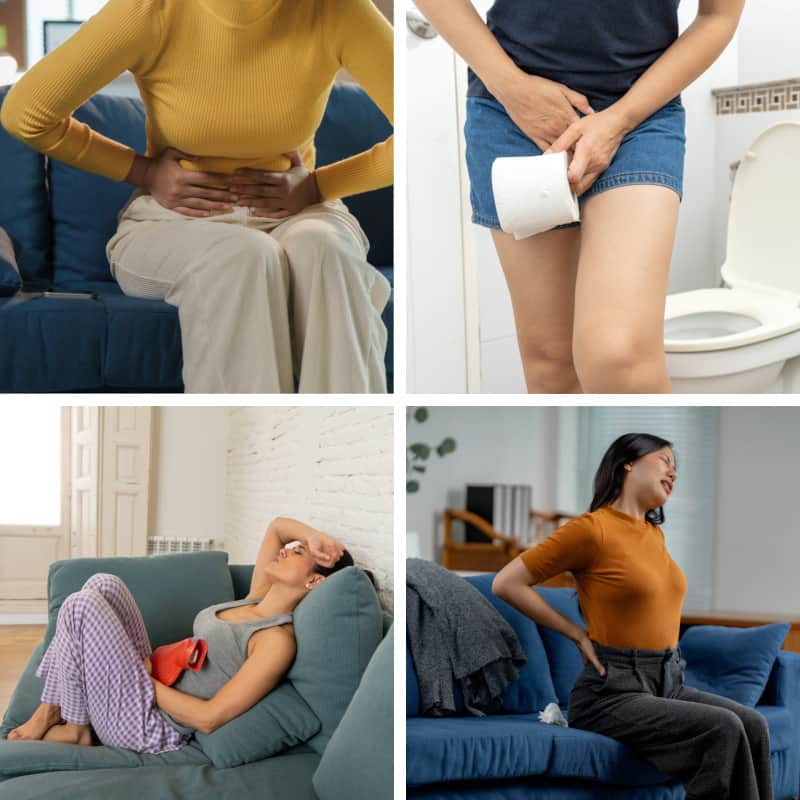
SIBO and endometriosis can both be associated with bloating, abdominal pain, diarrhea, and constipation. They may coexist, but symptoms alone cannot tell you which condition is responsible. Having endometriosis does not establish that it caused SIBO, and SIBO should not be assumed to explain every episode of endo belly.
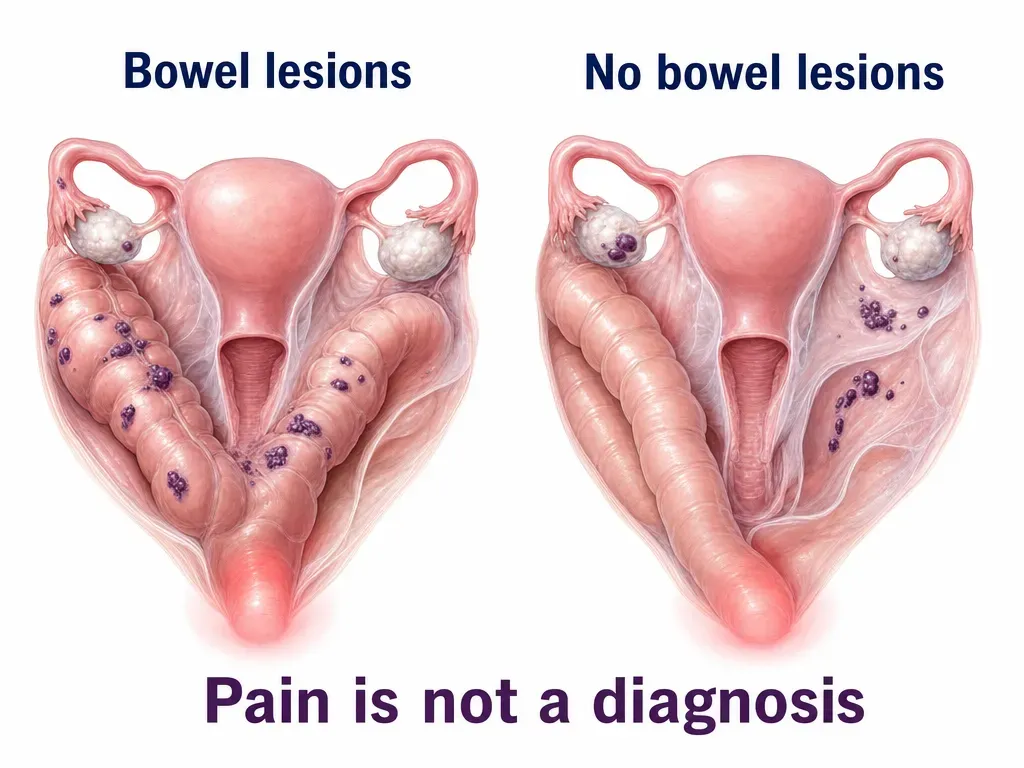
Small intestinal bacterial overgrowth, or SIBO, involves excess bacteria in the small intestine. Endo belly describes bloating or abdominal swelling experienced with endometriosis, rather than a diagnosis of what is causing it. Digestive symptoms can occur with endometriosis even when no lesions are found in the bowel.
The practical goal is to identify which problems need treatment, rather than force all symptoms into a single diagnosis. That may require both a gastrointestinal assessment and a review of endometriosis symptoms.
Symptom patterns guide evaluation but do not identify the cause
Track bowel symptoms alongside menstrual symptoms
Symptoms that worsen around your period can help your doctor consider endometriosis, but noncyclical symptoms do not rule it out. Pain with bowel movements also deserves attention, particularly when it is severe or changing.
In a 2025 retrospective study of preoperative questionnaires from 233 patients with surgically confirmed endometriosis, diarrhea, constipation, or bloating were reported at similar rates across groups with and without bowel involvement. Severe pain with bowel movements was more frequent in the bowel endometriosis group, but it also occurred without bowel lesions. This makes it a clue for further assessment, not a diagnosis or an automatic reason for surgery.
A symptom record can make your consultation more specific. Include:
- Timing: when symptoms began, whether they follow meals, and how they relate to your period.
- Bowel pattern: stool consistency, frequency, urgency, straining, and incomplete emptying.
- Pain: where it occurs, how much it limits activity, and whether passing stool makes it worse.
- Treatments and exposures: medications, supplements, antibiotics, dietary changes, and previous abdominal or pelvic surgery.
Ask what else could explain new or persistent symptoms
A familiar diagnosis should not automatically explain a new bowel problem. Depending on your history, a clinician may consider constipation, irritable bowel syndrome, food intolerances, celiac disease, inflammatory bowel disease, medication effects, or difficulty coordinating the pelvic floor during bowel movements.
Bring a complete medication list, including pain medicines and nonprescription products. Some medicines affect bowel movement or irritate the digestive tract, but do not stop prescribed treatment without discussing it with your clinician.
Improvement after avoiding a food does not distinguish SIBO from endometriosis or another digestive condition. Likewise, bloating after meals is not enough to diagnose bacterial overgrowth.
Breath testing is an option when the result could guide GI care
When to discuss a test
A gastroenterologist may consider a SIBO breath test for persistent, otherwise unexplained digestive symptoms when the history suggests overgrowth and the result could change treatment. Factors such as altered intestinal anatomy or problems with movement through the intestine may make testing more relevant. Endometriosis or bloating alone is not a reason for routine SIBO screening.
Testing usually involves drinking glucose or lactulose and providing breath samples over time to measure hydrogen and methane. Ask your clinician what question the test is intended to answer and what they would recommend after a positive or negative result.
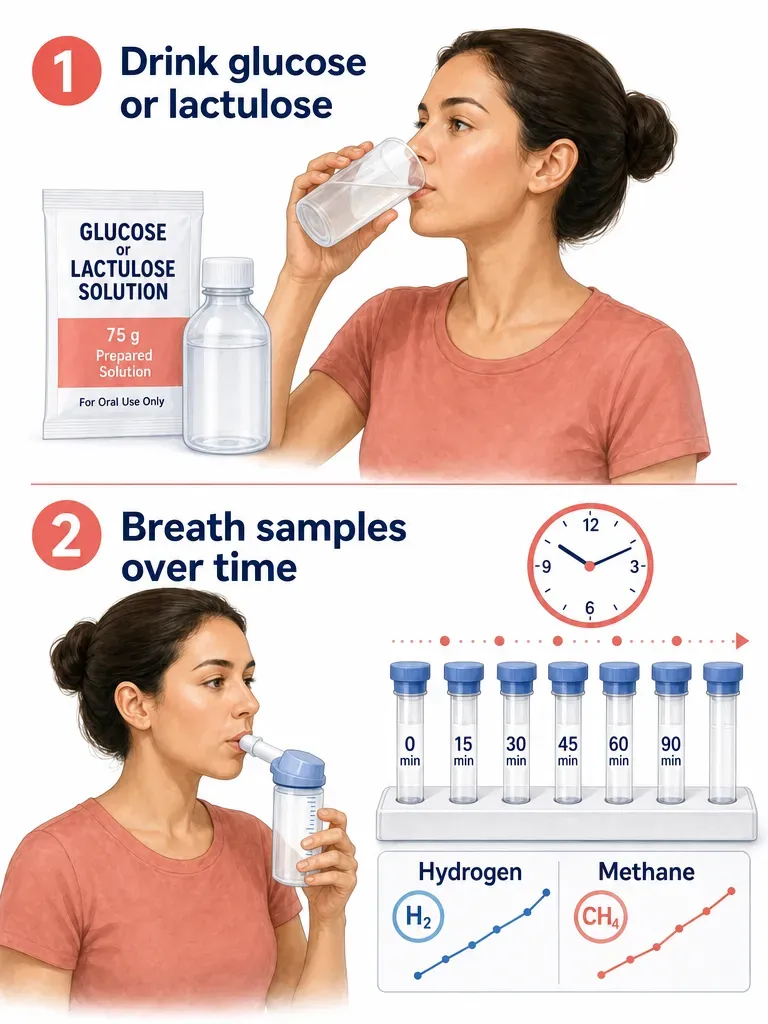
Preparation matters. Follow the testing service’s instructions about food, fasting, recent antibiotics, and medicines that affect bowel movement, and ask before withholding any prescribed medication.
What a result can and cannot tell you
Breath testing is an indirect assessment, not a direct count of small-intestinal bacteria. The test sugar, how quickly it travels through the intestine, preparation, and the gases a person’s microbes produce can all affect the result.
For example, rapid transit may allow fermentation in the colon to be mistaken for small-intestinal fermentation. False-negative results are also possible, so neither a positive nor a negative result should be interpreted without the symptom history and clinical context.
Methane-positive findings are generally discussed as intestinal methanogen overgrowth, or IMO. Methanogens are microorganisms distinct from bacteria and can live in the small intestine or colon; methane positivity is not proof of bacterial overgrowth. IMO is particularly relevant in the assessment of constipation.
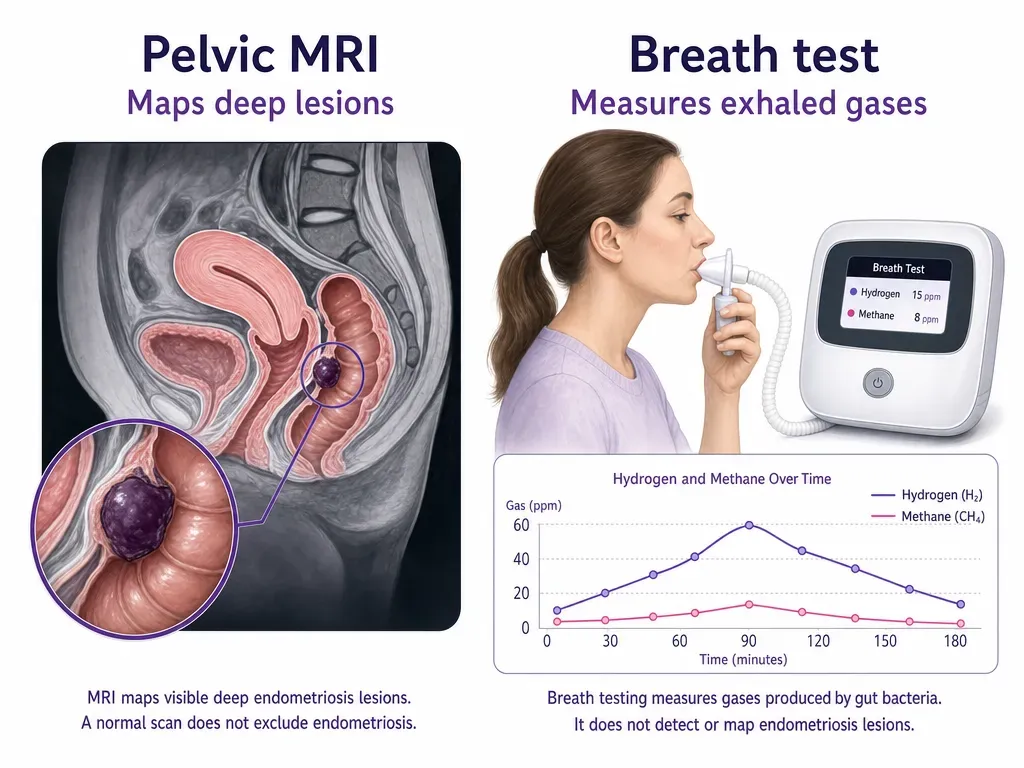
A breath test cannot diagnose or exclude bowel endometriosis. A positive result also does not establish that overgrowth explains every digestive or pelvic symptom.
Unsure What’s Behind Your Bloating?
Our specialists are here to help you understand your condition and explore your treatment options.
Schedule a ConsultationTreatment depends on the diagnosis and the goal
Discuss SIBO treatment and symptom follow-up with a GI clinician
Clinician-directed SIBO or IMO treatment may include antibiotics, alongside attention to contributing factors such as impaired intestinal movement, constipation, or altered anatomy. The choice depends on the clinical picture, gas pattern, prior treatment, side effects, and other health considerations. Avoid self-prescribed antibiotics or repeated courses based only on recurring bloating.
A 2026 systematic review of antibiotic treatment in adults and children with SIBO or methane-positive presentations found no universally superior antibiotic. Symptom improvement and breath-test normalization frequently did not match. These findings support judging treatment by symptom relief, tolerability, and recurrence, rather than a negative test alone.
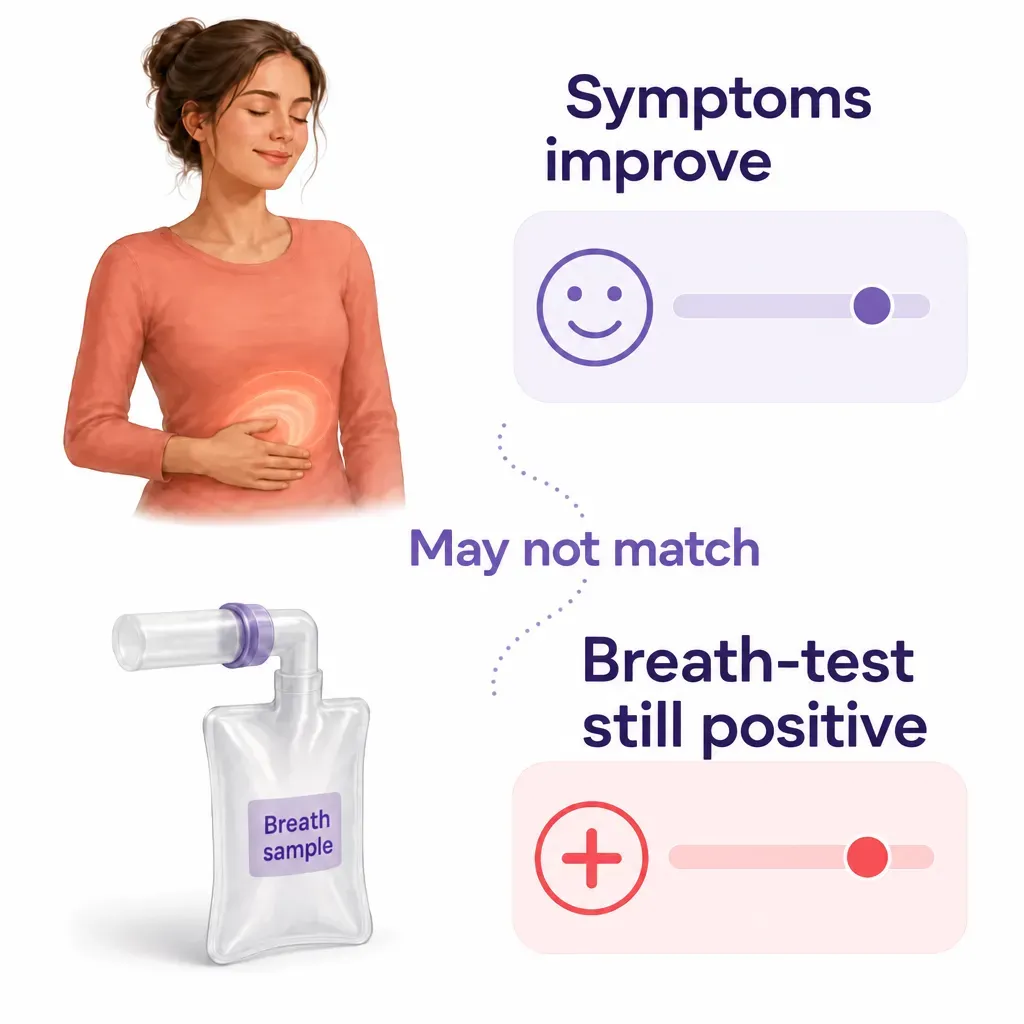
Before starting treatment, agree on which symptoms you hope to improve and when to follow up with the prescribing clinician. If symptoms persist or return, reassessment may be more appropriate than automatically repeating the same prescription.
Endometriosis treatment addresses a different problem. Depending on symptoms, imaging, reproductive goals, and preferences, options may include hormonal treatment, pain management, or excision surgery. Suspected bowel involvement requires individualized assessment of benefits and risks, sometimes with a colorectal surgeon; antibiotics do not treat endometriosis lesions, and surgery cannot be assumed to resolve every digestive symptom.
Use dietary changes for symptom relief, not as a diagnostic test or cure
A dietitian-supported, time-limited low-FODMAP trial may help selected people with troublesome digestive symptoms. This approach temporarily reduces certain fermentable carbohydrates, then reintroduces foods to identify individual tolerance. It is not necessary for everyone with endometriosis.
In a 2025 randomized, controlled crossover feeding trial of 35 women with endometriosis and poorly controlled gastrointestinal symptoms, 60% met the symptom-response criteria during a 28-day low-FODMAP diet, compared with 26% during the control diet. Response meant meeting a symptom-score threshold, not necessarily becoming symptom-free. Most meals were supplied, and a dietitian was available, so results may differ in everyday practice.
If a dietary trial helps, work toward reintroduction and a varied, personalized eating pattern rather than indefinite restriction. If it does not help, discuss stopping it instead of removing more foods. The feeding trial tested short-term restriction, not long-term outcomes after reintroduction.
Dietary improvement does not prove that SIBO was present or has been eliminated. A low-FODMAP diet is not a treatment for endometriosis lesions or a replacement for indicated medical care. Broad elimination diets and routine supplement regimens can add cost, nutritional risk, and symptoms without addressing the cause.
Persistent or changing symptoms deserve coordinated care
Bring both specialties the same symptom history
Persistent bloating or altered bowel habits, especially when they affect eating, sleep, or daily activities, warrant discussion with a gastroenterologist. A gynecologist or endometriosis specialist should also assess symptoms linked to periods, significant pain with bowel movements, or concern about bowel involvement. Both assessments may be needed even if one condition has already been diagnosed.
Specialist transvaginal ultrasound or pelvic MRI may help identify and map deep or bowel endometriosis. Imaging answers a different question from breath testing, and normal imaging does not exclude all forms of endometriosis. Share prior imaging, operative reports, breath-test results, and treatment responses with both clinicians.
Useful questions to bring include:
- Which possible causes fit my symptoms, and what else needs to be excluded?
- Would a breath test or specialist imaging change the treatment plan?
- Which symptoms is each treatment intended to improve?
- What is the next step if treatment helps only partly or symptoms return?
- Who will coordinate follow-up between gastroenterology and gynecology?
If you’d like a second opinion on your imaging or a recommended endometriosis treatment, the Lotus Endometriosis Institute team can review your options.
References
. Clinical Trial: Effect of a 28‐Day Low FODMAP Diet on Gastrointestinal Symptoms Associated With Endometriosis ( EndoFOD )—A Randomised, Controlled Crossover Feeding Study. Alimentary Pharmacology & Therapeutics. 2025. PMID: 40319391 PMCID: PMC12107219
Berbecaru, Zorilă, Istrate-Ofiţeru et al.. Deep endometriosis. Clinical, histopathological and confocal microscopy correlations in intestinal sites. Romanian Journal of Morphology and Embryology. 2025. PMID: 40384200 PMCID: PMC12236285
Piriyev, Mennicken, Schiermeier et al.. Is there a relationship between symptoms and types of endometriosis according to #ENZIAN? A comparative study of preoperative questionnaires. Archives of Gynecology and Obstetrics. 2025. PMID: 40580252 PMCID: PMC12374913
Petersson, Roth, Jokubkiene et al.. Comparison of sociodemographic factors, lifestyle, and gastrointestinal symptoms between patients with endometriosis and IBS. BMC Gastroenterology. 2025. PMID: 41120983 PMCID: PMC12538987
Jiao, Feng, Liu. Clinical diagnosis and treatment of bowel endometriosis and the distribution characteristics of lesions. BMC Women's Health. 2025. PMID: 41469645 PMCID: PMC12860066
Pencheri, Hansen, Nielsen et al.. Understanding the diagnostic process of endometriosis in primary care: An interview study with general practitioners in Denmark using clinical vignettes. The European Journal of General Practice. 2026. PMID: 41914461 PMCID: PMC13040569
Watrowski, Kostov, Schäfer et al.. Low-FODMAP Diet for Gastrointestinal Symptoms in Endometriosis: A Systematic Review. Nutrients. 2026. PMID: 42451164 PMCID: PMC13364091
Koller, Săsăran, Lupu et al.. Antibiotic therapy for small intestinal bacterial overgrowth: a systematic review of comparative efficacy, clinical–test discordance, and pediatric evidence gaps. Frontiers in Pharmacology. 2026. PMID: 42787509 PMCID: PMC13601715
Jodkiewicz, Malinowska, Marek-Woźny. Global perspectives on dietary management of small intestinal bacterial overgrowth (SIBO): a systematic review of clinical guidelines, consensus statements and expert recommendations. Frontiers in Medicine. 2026. PMID: 42865458 PMCID: PMC13654993
Quick Answers
Why do I have painful urination and pelvic cramping between periods?
Painful urination and pelvic cramping between periods can happen when the bladder, uterus, pelvic floor, or nerves are irritated. Endometriosis can contribute, but bladder pain syndrome, pelvic floor overactivity, or adenomyosis can also cause these symptoms.
Why do I look pregnant from bloating with constant pelvic pressure?
Bloating that makes you look pregnant with constant pelvic pressure can come from pelvic inflammation, swelling, or a sense of bulk. Endometriosis, adenomyosis, fibroids, ovarian cysts, and bowel sensitivity can contribute, and symptoms alone don’t reliably identify the cause.
Why do I get low back and leg pain during my period?
Low back and leg pain during your period can happen when pelvic inflammation irritates pain pathways that send pain into your back and legs. In some patients, endometriosis can play a role, but pain can also come from the spine, hips, or muscles.
Can endometriosis cause infertility and pelvic pain in your 20s?
Yes, endometriosis can cause chronic pelvic pain and fertility challenges in your late 20s. Pain can include severe period cramps, pain with sex, and bowel or bladder pain, though symptom severity doesn’t always match how much disease is present.