



Your Symptoms May Point to a Specific Endometriosis “Type”
Knowing your phenotype can guide better imaging, treatment choices, and surgical planning
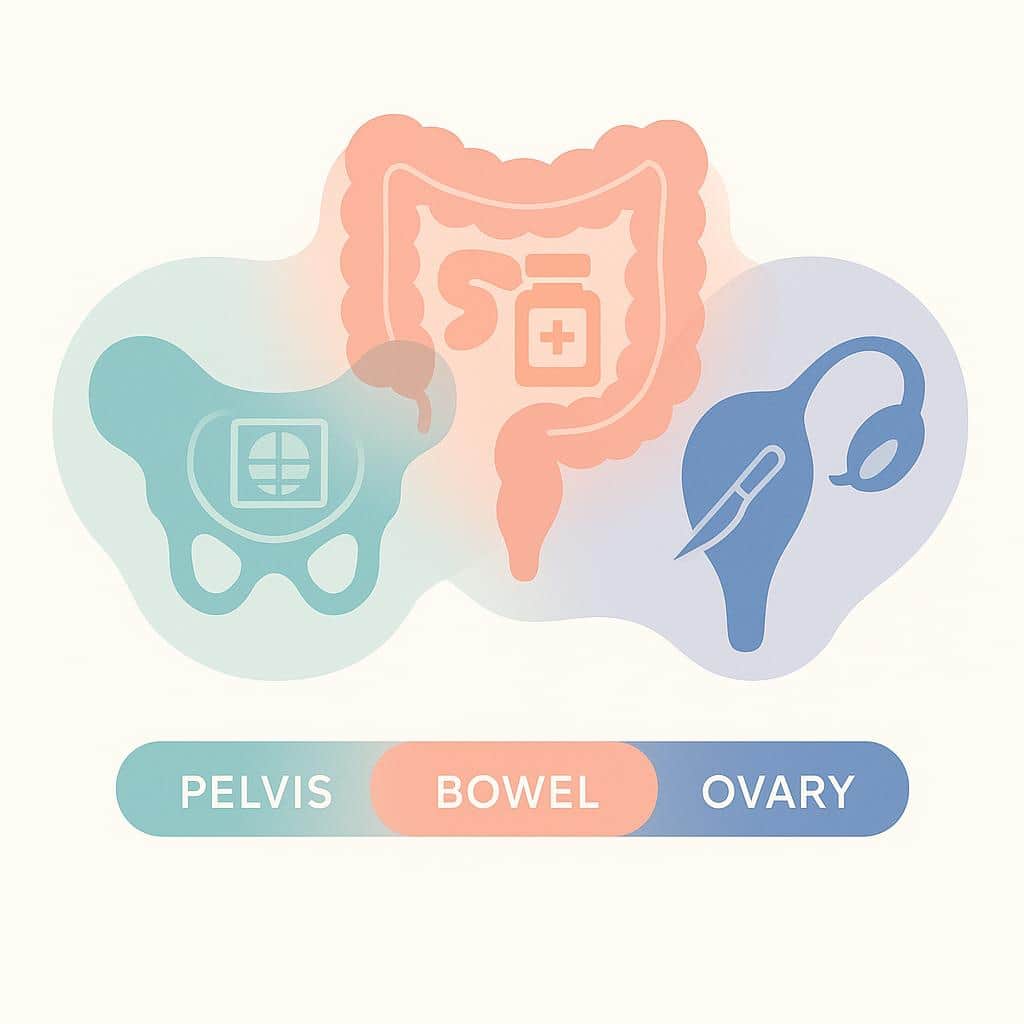
Living with endometriosis (and possibly adenomyosis), can be accompanied by the frustrating experience of being told your symptoms “don’t match” what was seen on imaging—or even what was found at surgery. Or you may have compared notes with someone else who “has endo too,” and realized your pain patterns are completely different.
That disconnect isn’t in your head. One practical reason is that endometriosis isn’t one single thing. Many people have a mix of phenotypes (types of disease), and those combinations can line up with different symptom profiles—especially when adenomyosis is part of the picture. Recent evidence from a large surgical endometriosis population suggests some symptom patterns are more common in specific phenotype combinations, which can help you and your clinician decide what to evaluate next and what treatments are most worth trying.
What “phenotype” means in real life
Clinicians often talk about endometriosis using phenotype labels based on where and how lesions grow:
- Superficial endometriosis (SE): lesions on the surface lining of the pelvis.
- Deep infiltrating endometriosis (DIE): deeper lesions that can involve ligaments, bowel, bladder, etc.
- Ovarian endometrioma (OMA, sometimes "OE"): cysts of endometriosis within the ovary, often called "chocolate cysts." This is the third classic anatomic phenotype alongside superficial and deep disease, and it carries its own implications for pain, fertility, and ovarian reserve.
- Adenomyosis (AM): endometrial-like tissue within the uterine muscle (NOTE: this is not technically endometriosis, but commonly overlaps and affects symptoms).
You can have one of these or a combination (for example, SE/AM or SE/DIE/AM). This matters because symptom patterns often reflect which organs are involved and whether the uterus itself (adenomyosis) is contributing to pain.
A note on the study behind this article: the large surgical dataset discussed below grouped patients by superficial, deep, and adenomyosis involvement, and did not analyze ovarian endometrioma as a separate category. So the symptom patterns that follow reflect those three axes. Endometrioma frequently coexists with them, but its specific symptom associations come from other evidence, not this study.
The big symptom clue: adenomyosis often means heavier pain burden
If your day-to-day reality is frequent pelvic pain, higher-intensity pelvic pain, and sex pain—especially if symptoms feel “uterine” (cramping, heavy pressure, bulky/tender uterus feelings)—it’s worth asking whether adenomyosis has been thoroughly evaluated, even if your endometriosis diagnosis is already established.
In a large group of surgically treated patients, people with superficial endometriosis only had the lowest frequency of pelvic pain and—among those who did have pelvic pain—the lowest pelvic pain intensity. In contrast, when adenomyosis was present alongside endometriosis (such as SE/AM or SE/DIE/AM), pelvic pain was reported more often, and among symptomatic patients the pain scores were higher.
What this means for you: if you’ve tried “standard endo” approaches and your pain still feels relentless, it may not be about trying harder—it may be about treating the right driver of your pain. Adenomyosis can change the treatment conversation in meaningful ways, including which medications are more likely to help and what surgical options are realistic if you want to preserve fertility.
Sex pain (dyspareunia)
Pain with sex is physically and emotionally exhausting—and it often gets brushed off as “just endo,” or something completely unrelated. Evidence suggests dyspareunia isn’t evenly distributed across endometriosis phenotypes.
In this study, dyspareunia was less common in people with SE only and more common when adenomyosis was present (notably SE/AM). That doesn’t mean superficial disease can’t cause sex pain—plenty of people with SE have severe symptoms. But it supports a practical point: if dyspareunia is a major issue for you, it’s reasonable to push for a broader evaluation that includes the uterus (adenomyosis) and not only “looking for endo lesions.”
In real-world terms, that could change the plan from “let’s just suppress cycles” to a more tailored strategy that might include:
- optimizing hormonal suppression choices,
- pelvic floor physical therapy when muscle guarding is part of the pain pattern,
- and surgical planning that accounts for both endometriosis and uterine disease.
Bladder pain (dysuria): frequency may differ even if intensity doesn’t
If you notice burning, pain with urination, “UTI-like” symptoms with negative cultures, or flares around your cycle, you deserve a careful evaluation—because bladder symptoms can overlap with endometriosis, adenomyosis, and conditions like interstitial cystitis/painful bladder syndrome.
In this evidence, dysuria was reported more often in people with combined phenotypes—especially SE/DIE/AM—but among those who did have dysuria, the intensity didn’t clearly differ across phenotype groups. In plain language: some phenotypes may make bladder symptoms more likely to show up, but once present, the “how bad it feels” may be influenced by factors beyond phenotype (inflammation, pelvic floor dysfunction, central sensitization, coexisting bladder conditions, and more).
Practical implication: if urinary symptoms are part of your picture, it’s not enough for your care team to say “that’s not typical endo.” It can be typical for some people—especially when disease patterns overlap—and it should be taken seriously.
Identify Your Endometriosis Type Today
Our specialists are here to help you understand your condition and explore your treatment options.
Schedule Your AssessmentBowel pain (dyschezia): deep disease is a red flag to check
Pain with bowel movements, rectal pressure, cyclical constipation/diarrhea, or sharp “knife-like” pain during a bowel movement can be life-limiting. While bowel symptoms can happen without bowel DIE, deep disease is an important possibility to evaluate.
Here, dyschezia was more common in the phenotype combination SE/DIE/AM and less common in SE only. And again, among people who had dyschezia, the intensity didn’t clearly differ by group—suggesting phenotype may influence likelihood of bowel symptoms more than it predicts exact severity.
What this means for your next appointment: if you have bowel pain (especially cyclical), it’s reasonable to ask whether your team has specifically evaluated for deep infiltrating disease and whether your imaging was done by someone experienced in endometriosis mapping (because routine ultrasound/MRI can miss or under-call DIE depending on technique and reader expertise).
How to use this information
These phenotype patterns are group-level trends, not rules. Two important “reality check” points can protect you from being dismissed:
First, symptoms don’t diagnose the phenotype. You can’t reliably “symptom-guess” whether you have SE, DIE, or adenomyosis. Imaging and/or surgery (when appropriate) still matter.
Second, lack of one symptom doesn’t rule out disease. For example, the finding that DIE was most clearly linked to more frequent dyschezia should never be twisted into “DIE isn’t painful” or “if you don’t have bowel pain, you don’t have DIE.” Pain is multifactorial, and people experience it differently.
Practical takeaways for your next steps
If your current treatment plan isn’t working—or you’re preparing for imaging, surgery, or a second opinion—use your symptom pattern to guide more specific questions.
- If pelvic pain is frequent and high-intensity: ask whether adenomyosis has been evaluated (and whether MRI or a specialized transvaginal ultrasound for adenomyosis is appropriate).
- If sex pain is prominent: ask how your clinician is assessing contributions from adenomyosis, DIE, pelvic floor muscle spasm, and vulvovaginal pain conditions—because treating only one piece often fails.
- If bladder symptoms flare cyclically: ask whether your plan includes evaluation for endometriosis involving the bladder/nearby areas and whether a parallel bladder-focused workup is needed if urine cultures are repeatedly negative.
- If bowel pain is a major feature: ask whether your imaging was performed/interpreted by an endometriosis-experienced team and whether deep disease has been specifically assessed.
Phenotype and Age: a moving target
Phenotype isn't fixed across the lifespan. The mix of endometriosis types tends to shift with age. In a large surgical series, isolated superficial disease was relatively more common in patients 24 and younger, while deep infiltrating endometriosis appeared more frequently in those older than 24 — after which the overall distribution stayed fairly stable through the early 40s. The practical takeaway: your age is one more reason a "one phenotype fits all" assumption can steer the workup wrong, and it's part of why a younger patient's superficial-appearing disease still deserves thorough evaluation rather than dismissal.
Questions to ask your doctor (bring these written down)
- “Based on my symptoms, do you suspect adenomyosis in addition to endometriosis? What imaging is best in your hands?”
- “Do my bowel/bladder symptoms change what you think my disease pattern might be—and how you’d plan surgery or medical therapy?”
- “If we treat endometriosis but not adenomyosis (or vice versa), what symptoms are least likely to improve?”
- “How long should we trial this medication before deciding it isn’t working for my pain pattern?”
- “If you’re recommending surgery, will the plan address deep disease if it’s found? Do you work with colorectal/urology colleagues when needed?”
- "If I have endometrioma type, how are you planning to treat that ovary?" "What if both ovaries are involved?"
Reality check: why your results may vary
Even with useful patterns, phenotype is only one piece of the puzzle. Pain severity can be shaped by inflammation, nerve involvement, pelvic floor dysfunction, trauma history, coexisting conditions (IBS, painful bladder syndrome, migraines), and central sensitization. Also, these data come from a surgical population, which often includes people with more severe symptoms or more complex cases than the average patient—so your experience may not match the averages in this or other studies.
Still, the practical value is real: when your clinician treats endometriosis as one uniform condition, it’s easier to end up with a one-size-fits-all plan that doesn’t fit you. Using phenotype-aware thinking can help you push for the right imaging, the right referrals, and a treatment strategy that matches your actual symptom burden and fertility plans.
References
Hofbeck, Au, Blum, Sipulina, Lotz, Lermann, Renner, Fasching, Beckmann, Burghaus. Clinical characterization of endometriosis phenotypes. Archives of Gynecology and Obstetrics. 2025.. DOI: 10.1007/s00404-025-08191-4
Distribution of endometriosis phenotypes according to patients’ age in adult women with surgical evaluation M Bourdon , C Maignien , L Marcellin , L Maitrot Mantelet , G Parpex , P Santulli , C Chapron. Human Reproduction, Volume 39, Issue 10, October 2024, Pages 2259–2267, https://doi.org/10.1093/humrep/deae180
Quick Answers
Why does ovarian cyst pain keep coming back?
Ovarian cyst pain can feel “recurrent” for a few different reasons. Some cysts are functional (they form with ovulation and then resolve), so the pain returns in a similar spot month after month even though it’s not the exact same cyst. In other cases, the cyst itself can come back or persist—especially if it’s an endometrioma (an ovarian cyst caused by endometriosis), which can behave differently than a simple cyst and may be associated with deeper pelvic disease.
Another common reason is that the cyst isn’t the whole story: endometriosis on the pelvic sidewall, uterosacral ligaments, bowel, bladder, or around the ovary can irritate the same nerves and tissues and make it feel like “my cyst is back” when the driver is actually inflammatory disease nearby. Adhesions (scar-like bands) can also tether the ovary and cause recurring pulling or sharp pain, even when imaging doesn’t show a large cyst. If your pain cycles, escalates, returns quickly after a “normal” ultrasound, or keeps recurring despite prior treatment, our team can help you map the pattern, interpret imaging with an endometriosis lens, and decide whether targeted evaluation and—when appropriate—excision surgery is the next best step.
Can endometriosis cause infertility and pelvic pain in your 20s?
Yes. Endometriosis can absolutely show up in your late 20s and it can be a driver of both chronic pelvic pain and fertility challenges. Pain can include severe or worsening period cramps, pain with sex, bowel or bladder pain, and “flare” patterns that track with your cycle—although symptom severity doesn’t always match how much disease is present.
Endometriosis can affect fertility in several ways, including adhesions that distort tubo‑ovarian anatomy, inflammation and immune signaling that interferes with fertilization or embryo development, and ovarian factors—especially when endometriomas are involved. For some patients, the uterine environment also matters, particularly when adenomyosis is present alongside endometriosis. In our practice, we focus on listening to your full symptom and fertility story and then building an evaluation that looks for endometriosis while also checking for common look‑alikes or coexisting issues, so we can tailor a plan to your goals—whether that’s pain relief, preserving fertility, or both.
Why do I have chronic fatigue and pelvic pain?
Chronic fatigue plus pelvic pain often feels “unexplainable” because it’s rarely caused by just one issue—and many of the most common drivers don’t show up on routine labs or a quick ultrasound. Endometriosis and adenomyosis can cause persistent pelvic pain, painful periods, bowel/bladder symptoms, and deep fatigue through inflammation, disrupted sleep, heavy bleeding (and possible iron deficiency), and the sheer energy cost of living with ongoing pain. It’s also common for more than one gynecologic condition to coexist—like fibroids, polyps, or benign cysts—so a single label may not fully match what you’re experiencing.
Another reason symptoms can persist is that the nervous system can become more pain-sensitive over time (often called central sensitization), meaning pain can spread, linger outside your cycle, or feel disproportionate to what imaging shows. In those cases, symptom relief alone can miss the bigger picture: we think in terms of both treating disease (for example, addressing endometriosis lesions or uterine drivers like adenomyosis/fibroids) and building a personalized pain-management plan so your body can “turn down the volume” on pain signals.
If your fatigue and pelvic pain have been brushed off or left without a clear plan, our team can help you sort through the likely contributors, including endometriosis/adenomyosis and common coexisting conditions, and map next steps that fit your goals. You can explore our educational resources on fatigue, chronic pelvic pain, and comprehensive treatment approaches, and reach out to schedule a consultation when you’re ready.
Why does sex hurt more around my period?
Pain with sex that flares around your period often points to a hormonally driven pelvic pain source—meaning tissue and nerves in the pelvis become more inflamed and reactive in the days leading up to bleeding and during menstruation. Endometriosis is a common reason: lesions can irritate nearby nerves and organs, and the inflammatory chemicals they produce can amplify pain signals. Adenomyosis (endometrial-like tissue within the uterine muscle) can also make the uterus unusually tender and crampy, so penetration, orgasm-related uterine contractions, or even pelvic pressure can feel painful around that time.
The “where” and “when” of the pain matters. Deep pain with penetration can be related to endometriosis near the uterosacral ligaments, cervix/vaginal fornix, rectovaginal space, bowel, or bladder—especially if scarring or adhesions have altered how those structures move. Pain after sex or after orgasm can happen when pelvic floor muscles spasm or when uterine contractions tug on sensitized areas. If this pattern is recurring, our team can help map your symptom timing and triggers and evaluate for endometriosis, adenomyosis, pelvic floor dysfunction, and overlapping bladder/bowel involvement so treatment targets the real driver of your pain rather than just masking it.
Why is my period pain so severe it disrupts my daily life?
Severe, life-disrupting period pain isn’t “normal cramps,” and it often points to an underlying driver that deserves a real explanation—not just symptom masking. One common cause is endometriosis, where tissue similar to the uterine lining grows outside the uterus and can irritate pelvic structures, trigger inflammatory chemicals, and sometimes involve organs like the bowel or bladder. Another key point is that pain severity doesn’t reliably match “stage,” so someone can have intense pain even if imaging looks normal or disease appears limited.
When period pain is severe, worsening over time, starts years after your first period, or comes with heavy bleeding, painful sex, bowel pain with periods, urinary pain, or fatigue, we think in patterns—because endometriosis and related conditions can overlap with pelvic floor dysfunction, nerve pain/central sensitization, GI dysbiosis, vascular issues, or adenomyosis. Our approach is to take your full timeline and flare pattern seriously and then tailor evaluation with careful exam and expertly interpreted imaging when helpful. If your pain is disrupting school, work, relationships, or daily functioning, reach out to schedule a consultation—our team can help you identify what’s driving it and map out a plan aimed at lasting relief.