



Overlooked Endometriosis Neighbors: Adenomyosis, Bladder, and Bowel Pain
Why “successful” endometriosis excision surgery may not end pain?
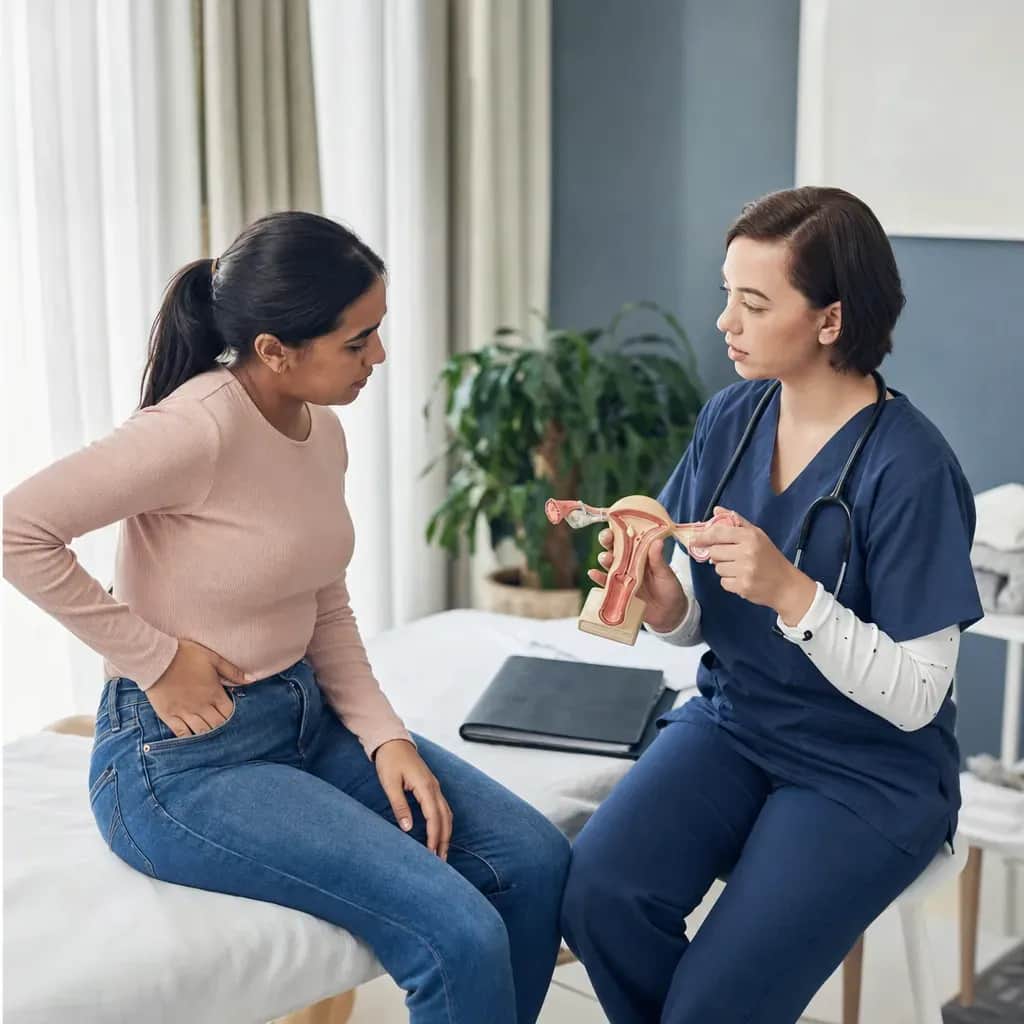
Endometriosis surgery can be technically successful—visible lesions removed, pathology confirmed, organs freed from fibrosis—yet you may still feel pelvic pain, pressure, urinary urgency, or bowel distress. When this happens, it’s easy to assume the endometriosis “came back” or that surgery “failed” depending on how long ago it was performed. But many patients are dealing with pain signals coming from nearby organs that can mimic endometriosis symptoms or flare alongside it.
We pulled together evidence from multiple studies showing a consistent theme: endometriosis often overlaps with adenomyosis (uterine muscle involvement), bladder pain syndromes, and bowel sensitivity/IBS-like symptoms. These “neighbors” can keep pain going even after endometriosis is treated—especially if they weren’t identified before surgery or if the treatment plan focused on only one source of pain. It's critical to keep in mind that endometriosis can cause a lot of symptoms, some seemingly unrelated, but it does not cause everything!
Why nearby organs can keep you hurting after endometriosis surgery
Pelvic organs share nerve pathways and live in close quarters. That means inflammation or irritation in one area can “spill over” into another—through shared nerves, muscle guarding, and a sensitized pain system. In practical terms:
- Uterus pain (adenomyosis) can feel like deep pelvic aching, heavy pressure, cramping, and pain with sex.
- Bladder pain (interstitial cystitis/bladder pain syndrome) can feel like pelvic pain, urethral burning, urgency, frequency, and pain that worsens as the bladder fills.
- Bowel sensitivity (often diagnosed as IBS, if IBD like Crohn's or ulcerative colitis is not found) can feel like cramping, bloating, constipation/diarrhea swings, and pain that overlaps with menstrual or pelvic pain patterns.
Importantly, these conditions don’t just “look similar.” Large population data show they co-occur more often than you’d expect by chance, suggesting shared risk factors and potentially shared biology grounded in immunomodulation disorders and inflammatory changes.
Bowel symptoms after surgery: IBS overlap is common—and hard to separate by symptoms alone
If you have bloating, constipation, diarrhea, or “endo belly,” you may wonder: is this still endometriosis, or is it IBS, or even IBD?
A population-based cohort study found that endometriosis and IBS were statistically associated (roughly 1.8–1.9 times higher odds of one diagnosis when the other was present). What’s striking is that when researchers compared recent GI symptom severity, the endometriosis group and IBS group looked very similar across common symptom domains (pain, diarrhea, constipation, bloating, nausea, and day-to-day impact). In other words: symptoms alone didn’t reliably distinguish them in that general-population setting.
Genetic and large-dataset research adds another layer. Using UK Biobank and genetic analyses, a major study found endometriosis most strongly co-occurred with IBS and reflux/GERD (with about twofold higher odds for IBS in women with endometriosis, and vice versa). The same work found a positive genetic correlation between endometriosis and IBS (and some other upper-GI conditions), suggesting there may be shared biological pathways—one reason bowel symptoms can be persistent, overlapping, and not fully explained by “just hormones” or “just surgery.”
A strong association exists between endometriosis and Inflammatory Bowel Disease (IBD), as well. Studies show women with endometriosis are roughly 50% more likely to develop Crohn's disease or ulcerative colitis. Both conditions are chronic, immune-mediated inflammatory disorders which share symptoms like abdominal pain and constipation.
What this means for you
If your main post-op symptoms are bowel-focused—bloating, cramping, constipation/diarrhea changes—there are two key takeaways from the combined evidence:
- Having IBS-like symptoms doesn’t rule endometriosis in or out, and it doesn’t prove your endometriosis surgery failed.
- It can be reasonable to pursue a dual-track plan: continued endometriosis-informed care and a GI evaluation/treatment pathway (evaluation for IBD and at least dietary strategies, gut–brain approaches, constipation management, selective testing and so on), rather than waiting for one specialist to explain everything.
Bladder pain can masquerade as “endometriosis that didn’t improve”
Bladder pain syndrome/interstitial cystitis (IC/BPS) is one of the most commonly missed “neighbors” when pelvic pain persists—especially if urinary symptoms aren’t dramatic.
In a prospective study of women with chronic pelvic pain selected for pelvic tenderness (uterus and/or bladder area), the overlap was very high: a majority had findings consistent with IC on cystoscopic criteria, and many also had biopsy-confirmed endometriosis. The clinical message isn’t that “everyone has IC,” but that in the right chronic pelvic pain population, bladder pain can be extremely common and easily overlooked.
A later clinical review emphasized something many patients experience: persistent pain after endometriosis treatment—including even after hysterectomy for pelvic pain—may reflect an unrecognized bladder component. It also points out an important pitfall: if endometriosis is seen at laparoscopy, it’s tempting to stop looking. But pelvic pain is often multi-factorial, and some diagnostic approaches (like visual diagnosis alone without biopsy confirmation) can complicate the picture.
Signs that a bladder “neighbor” may be involved
Some people have classic urgency and frequency; others mainly have pain. Patterns that often raise suspicion include pain that:
- worsens with bladder filling and improves after voiding,
- is accompanied by urgency/frequency/nocturia,
- flares with certain foods/drinks (acidic, caffeinated, carbonated),
- persists even when endometriosis has been thoroughly treated.
Studies and expert discussions also highlight that testing strategies vary (symptom questionnaires, voiding diaries, urinalysis/culture, and selective procedures like cystoscopy/hydrodistention or other provocative tests). No single test is perfect—false negatives can occur—so the goal is often to identify a consistent pattern and rule out infections or other causes, then consider IC/BPS-focused treatment trials.
Still in Pain After Surgery?
Our specialists are here to help you understand your condition and explore your treatment options.
Get Expert HelpAdenomyosis: the uterine “neighbor” that can keep pain going
Adenomyosis can be especially frustrating after endometriosis surgery because the uterus is often not removed during typical excision procedures (unless hysterectomy is part of the plan for this reason). It can cause ongoing cramping, heavy bleeding, pelvic pressure, and pain with sex—symptoms that can look like endometriosis persistence.
A recent review cautions against oversimplifying adenomyosis as “endometriosis of the uterus.” The best current evidence suggests they can overlap, and they may share some molecular features, but they are not proven to be the same disease process. Both conditions likely include multiple subtypes, which may explain why symptoms and treatment responses vary so much from person to person.
Why adenomyosis matters when planning or recovering from deep endometriosis surgery
One study focused on deep endometriosis laparoscopic surgery found that ultrasound features suggestive of adenomyosis were linked to a higher post-operative complication rate, even after accounting for factors like surgical complexity. Complications were mostly minor, but the risk difference was meaningful, and operative times were longer when adenomyosis was present.
For patients, this isn’t meant to alarm—it’s meant to support better planning:
- If adenomyosis is suspected, it may affect risk counseling, recovery expectations, and decisions about referral to high-experience centers.
- It also reinforces a common post-op scenario: you can have a technically successful endometriosis surgery and still have uterine-source pain afterward if adenomyosis remains active. So, if fertility is desired it may be worth the risk of this scenario. On the other hand, if fertility is no longer a consideration then a risk-benefit discussion regarding hysterectomy based on symptoms and imaging is prudent.
Putting it together: why these “neighbors” often travel together
Across bowel, bladder, and uterine sources, the combined research points to a few unifying ideas:
- Co-occurrence is real. Endometriosis is associated with IBS and reflux diagnoses in large datasets, and clinical pelvic pain populations show substantial bladder overlap.
- Symptoms are not specific enough to self-diagnose the source. GI symptom patterns can look the same in endometriosis and IBS groups; bladder pain can exist even without classic urinary complaints.
- Shared biology is plausible. Genetic analyses suggest partial overlap in underlying risk for endometriosis and certain GI disorders (especially IBS and reflux-related phenotypes), which may help explain why multiple organ systems can flare together.
- A single diagnosis may not explain persistent pain. Finding (and treating) endometriosis is important, but it doesn’t automatically eliminate other pain generators next door.
Practical takeaways: how to talk to your doctor after surgery
Use your post-op symptoms to guide the next questions. A helpful approach is to ask, “What else could be contributing—uterus, bladder, bowel—and how do we check?”
Here are focused questions to bring to a visit (choose the ones that fit your symptoms):
- “Could adenomyosis be contributing to my pain or bleeding? Would a targeted transvaginal ultrasound or MRI help clarify that?”
- “Do my symptoms fit bladder pain syndrome/IC? Should I keep a 24-hour voiding diary or complete a bladder symptom questionnaire?”
- “If urine tests are negative, what’s our plan to evaluate bladder-related pain—do we try bladder-directed treatments, pelvic floor therapy, or refer to urology/urogynecology?”
- “My bowel symptoms didn’t improve after surgery. Should we treat this as possible IBS overlap in parallel, and are there any red flags that mean I need GI testing?”
- “Can we review my medications (NSAIDs, hormones, GI meds) to see if any could be worsening reflux, bowel symptoms, or bladder irritation?”
What to watch for
Persistent symptoms deserve attention, but some situations warrant faster evaluation—especially new bleeding patterns, unexplained weight loss, blood in stool/urine, recurrent confirmed UTIs, fevers, or significant anemia symptoms. If you have these, ask directly whether you need expedited workup rather than assuming it’s “just endo.”
What we still don’t know
Even with newer genetic and population research, there are real limits to the evidence:
- Causality is hard to prove. Genetic methods suggest possible bidirectional links between endometriosis, IBD and IBS, but effects appear small and some results depend on the analytic method. This supports overlap—not a simple “A causes B” story.
- Study populations matter. Some bladder/endometriosis overlap data come from selected chronic pelvic pain clinics, which may not reflect everyone with endometriosis.
- Diagnoses aren’t always measured the same way. Registry diagnoses, self-reported IBS, imaging-based adenomyosis criteria, and surgical confirmation each capture different slices of reality—so prevalence and overlap estimates can swing widely.
- Subtypes likely matter. Both endometriosis and adenomyosis include multiple phenotypes, and those differences probably influence who has bladder symptoms, bowel symptoms, bleeding, or persistent pain after surgery.
The most useful conclusion for patients isn’t that any one “neighbor” organ is the answer—it’s that persistent pain after endometriosis surgery often warrants a wider lens. When uterus, bladder, and bowel are considered together, you’re more likely to find a treatable pattern and build a plan that actually matches your body’s signals.
References
Junkka, Ohlsson. Associations and gastrointestinal symptoms in women with endometriosis in comparison to women with irritable bowel syndrome: a study based on a population cohort. BMC Gastroenterology. 2023. PMID: 37400789 PMCID: PMC10316551
Yang, Wu, Hockey et al.. Evidence of shared genetic factors in the etiology of gastrointestinal disorders and endometriosis and clinical implications for disease management. Cell Reports Medicine. 2023. PMID: 37909040 PMCID: PMC10694629
Habiba, Guo, Benagiano. Are Adenomyosis and Endometriosis Phenotypes of the Same Disease Process?. Biomolecules. 2023. PMID: 38254632 PMCID: PMC10812963
Chung, Chung, Gordon. Interstitial Cystitis and Endometriosis in Patients With Chronic Pelvic Pain: The “Evil Twins” Syndrome. JSLS : Journal of the Society of Laparoendoscopic Surgeons. 2005. PMID: 15791965 PMCID: PMC3015562
Butrick. Patients With Chronic Pelvic Pain: Endometriosis or Interstitial Cystitis/Painful Bladder Syndrome?. JSLS : Journal of the Society of Laparoendoscopic Surgeons. 2007. PMID: 17761077 PMCID: PMC3015726
Gracia, de Guirior, Valdés-Bango et al.. Adenomyosis is an independent risk factor for complications in deep endometriosis laparoscopic surgery. Scientific Reports. 2022. PMID: 35490172 PMCID: PMC9056502
Quick Answers
How is multi-organ endometriosis treated without organ removal?
In many multi-organ cases, conservative surgery removes endometriosis and frees organs from scar tissue while preserving the organs themselves. Robotic excision can improve precision, and treatment planning may include other surgical specialists.
Why do I have painful urination and pelvic cramping between periods?
Painful urination and pelvic cramping between periods can happen when the bladder, uterus, pelvic floor, or nerves are irritated. Endometriosis can contribute, but bladder pain syndrome, pelvic floor overactivity, or adenomyosis can also cause these symptoms.
When is hysterectomy recommended for adenomyosis?
Hysterectomy is typically considered for adenomyosis when severe symptoms come from the uterus and you’re not planning future pregnancy. It is usually weighed most strongly when conservative treatments haven’t provided acceptable relief, aren’t tolerated, or don’t fit your goals.
Which adenomyosis symptoms most affect daily life?
Heavy or prolonged periods and severe period pain usually cause the biggest disruption to daily life with adenomyosis. Bleeding can affect work, school, travel, and sleep, while fatigue, pelvic pressure, and pain with sex for some people can add to the burden.