




What Causes Adenomyosis? What New Studies Suggest
New studies explore possible origins and ongoing changes, but none identifies a cause for every person.

What may cause adenomyosis
There is no established single answer to what causes adenomyosis. Possible starting points include repeated injury and repair at the boundary between the uterine lining and muscle, changes in how cells develop or move, and influences dating back to development before birth. Hormonal activity, inflammation, and muscle scarring may then help sustain the condition.
What starts adenomyosis and what keeps it active may be different processes. Finding a change in tissue after adenomyosis has developed does not establish that the change caused it.
Possible origins are not proven causes
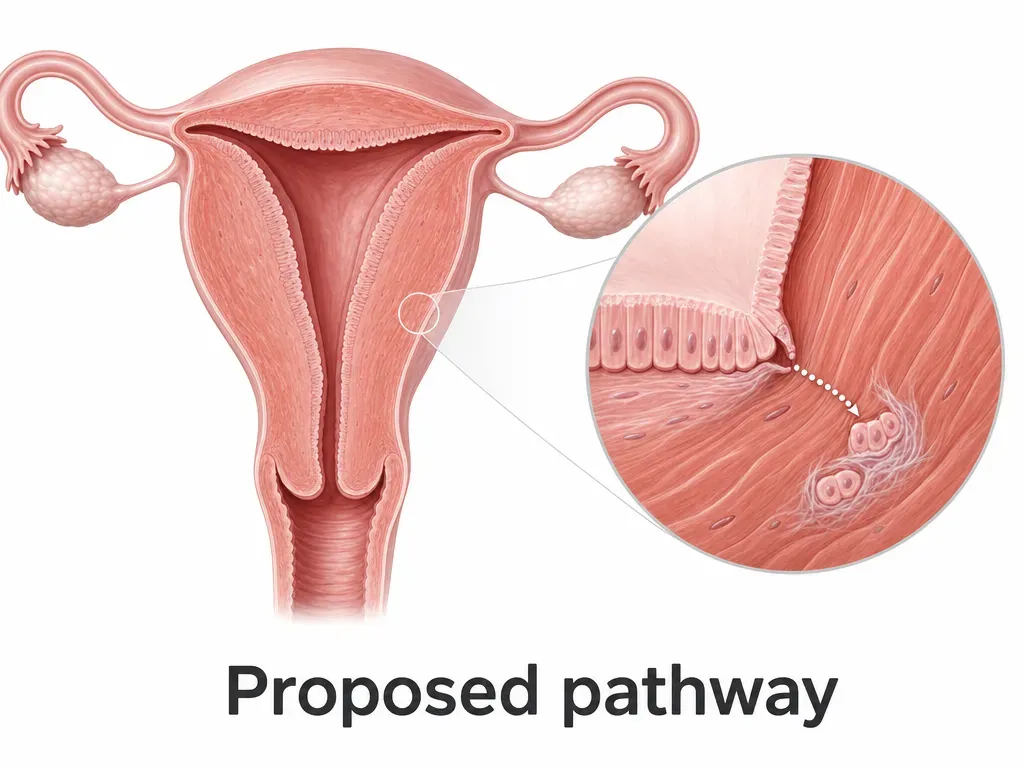
One leading explanation is that repeated small injuries disrupt the boundary between the lining and muscle. Repair may then become abnormal, allowing lining cells to move into the muscle. This theory includes microscopic injury from uterine contractions, so it does not require a history of uterine surgery.
Other explanations involve stem cells moving or developing abnormally, or cells left from early development changing into lining-like tissue. These possibilities may overlap rather than compete: different starting points could lead to similar changes in the uterus.
A 2026 review of human and laboratory findings on adenomyosis origins brings these possibilities together with local hormone activity, inflammation, and fibrosis, meaning scar-like tissue buildup. It proposes an integrated explanation, rather than reporting a new patient cohort or proving a universal cause. It cannot tell an individual why their adenomyosis developed.
A shorter anogenital measurement is an early developmental clue
Anogenital distance is the distance from the anus to a specified genital landmark. Because this measurement can reflect aspects of hormonal exposure before birth, investigators have explored whether it might provide clues about susceptibility to adenomyosis.
In a 2026 prospective case-control study of 40 women with ultrasound-diagnosed adenomyosis and 40 healthy controls, the average distance from the anus to the back edge of the vaginal opening was shorter in the adenomyosis group: 23.78 millimeters versus 27.88 millimeters. A separate measurement from the anus to the clitoral tip did not differ significantly.
There was substantial overlap between individuals in the groups. Adult hormone measurements were also similar, so this finding does not establish a current hormone imbalance or show that prenatal hormones caused adenomyosis.
For readers, the relevance is a possible developmental contribution, not a reason to request this measurement. Anogenital distance is not a validated screening or diagnostic test for adenomyosis.
Progesterone resistance may help sustain changes
Progesterone resistance means that tissue responds less effectively to progesterone’s signals. It does not necessarily mean that the body produces too little progesterone, and a routine blood progesterone measurement cannot establish how adenomyosis tissue responds.
The 2026 review of adenomyosis origins describes reduced progesterone responsiveness alongside increased local estrogen activity. Together with inflammation, these changes may favor tissue growth and abnormal repair. They may help explain persistence after adenomyosis begins, without identifying the original trigger.
This mechanism also does not mean that all progesterone-based treatments will fail. Progestin medicines and a levonorgestrel-releasing intrauterine device remain options for symptom control; their suitability depends on symptoms, pregnancy plans, side effects, and previous response.
Muscle changes may help explain painful contractions
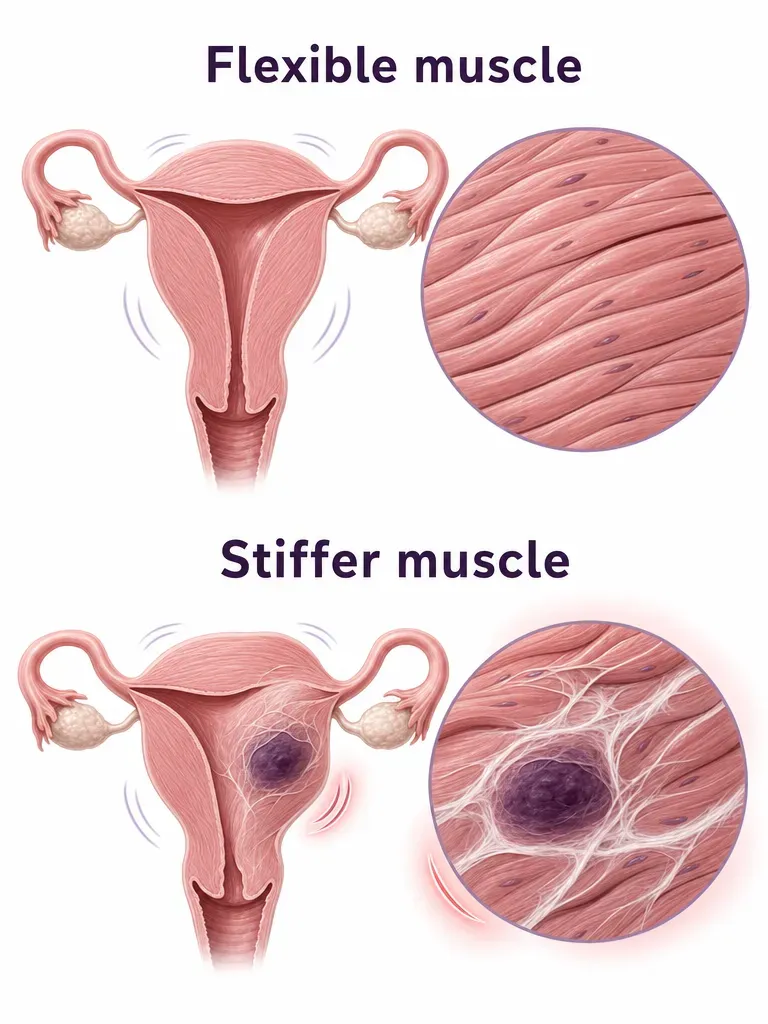
Changes in the surrounding uterine muscle may help explain why adenomyosis causes painful periods. Fibrosis can make tissue stiffer, potentially changing how muscle cells sense mechanical forces and coordinate contraction and relaxation.
PIEZO1 is a protein channel that helps cells respond to mechanical forces. In a 2026 human-tissue and laboratory study, investigators compared uterine muscle from 30 people with adenomyosis and 20 controls, cultured muscle cells from 15 participants in each group, and used a mouse model of induced adenomyosis.
In the human tissue, more fibrosis and lower PIEZO1 levels were associated with more severe period pain. Changes were particularly evident near adenomyosis lesions. These are associations in tissue from people who already had the condition, not proof of how it began.
The laboratory experiments help explain a possible connection. Cells grown on stiffer surfaces produced less PIEZO1, and manipulating PIEZO1 affected a pathway involved in producing nitric oxide, a substance that helps smooth muscle relax. Mice with induced adenomyosis developed stronger, more irregular uterine contractions alongside related muscle changes.
This suggests that scarring may interfere with the uterus’s relaxation signals and contribute to painful contractions. It does not show that increasing PIEZO1 will relieve pain in people. The experimental compounds and cell interventions are not established adenomyosis treatments.
Wondering What Causes Adenomyosis?
Our specialists are here to help you understand your condition and explore your treatment options.
Schedule a ConsultationInflammation may connect several findings
Inflammation could connect abnormal repair, hormonal signaling, fibrosis, and changes in uterine function. However, inflammation associated with adenomyosis and a separate diagnosis of chronic endometritis are different questions. Neither should automatically be assumed to explain the other.
Chronic endometritis was associated with adenomyosis in a small pilot
Chronic endometritis is persistent inflammation of the uterine lining, assessed through tissue sampling for characteristic immune cells. Symptoms alone cannot reliably identify it.
A 2026 cross-sectional pilot study enrolled 37 women with endometriosis. Seven were excluded because their samples were not representative, leaving 30 for analysis. Of those, 18 had chronic endometritis, and all 18 also had imaging-diagnosed adenomyosis; adenomyosis was present in 5 of the 12 women without chronic endometritis.
That is an early signal that these conditions may cluster in some people. Because the study examined them at the same time, it cannot establish which came first or whether one caused the other. Its small, selected population also cannot tell us how often chronic endometritis occurs among everyone with adenomyosis.
The chronic endometritis pilot did not test whether diagnosing or treating the inflammation improved pain, fertility, or adenomyosis itself. It therefore does not justify routine endometrial biopsies or antibiotics solely because someone has adenomyosis. In a fertility evaluation, a useful question is whether there is a separate reason to assess the uterine lining and how a result would change treatment.
Junctional-zone inflammation may matter for fertility
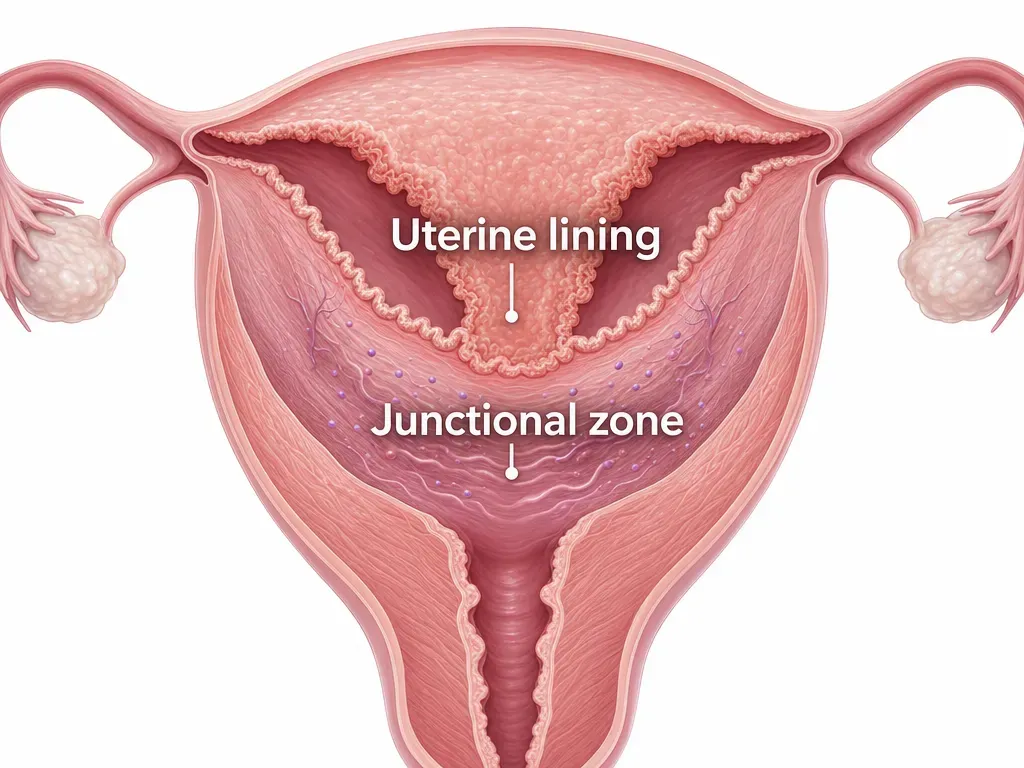
The junctional zone is the inner uterine muscle next to the lining. Its coordinated contractions and interaction with the lining matter for reproduction, making it a focus of explanations for adenomyosis-related fertility difficulties.
A separate 2026 review of inflammatory signaling in adenomyosis-related infertility describes how immune messenger molecules, called cytokines, may disrupt this area. Proposed effects include abnormal contractions, altered blood flow, fibrosis, and impaired preparation of the lining for implantation. This is a synthesis of clinical and laboratory findings, not a new fertility trial.
These mechanisms offer possible explanations for fertility problems, but they cannot predict an individual’s chance of pregnancy. A junctional-zone finding on imaging also does not measure cytokine activity or prove that inflammation is the reason someone has not conceived.
Cytokine measurements and drugs targeting these pathways remain unvalidated for this purpose. The fertility review does not establish that blocking a particular inflammatory signal improves pregnancy or live-birth outcomes in people with adenomyosis.
What these findings mean for decisions now
Anogenital distance, PIEZO1, and cytokine measurements are not validated adenomyosis tests. Proposed treatments targeting these pathways have not been shown to benefit patients with adenomyosis. A plausible biological mechanism is a starting point for testing a treatment, not proof that it works.
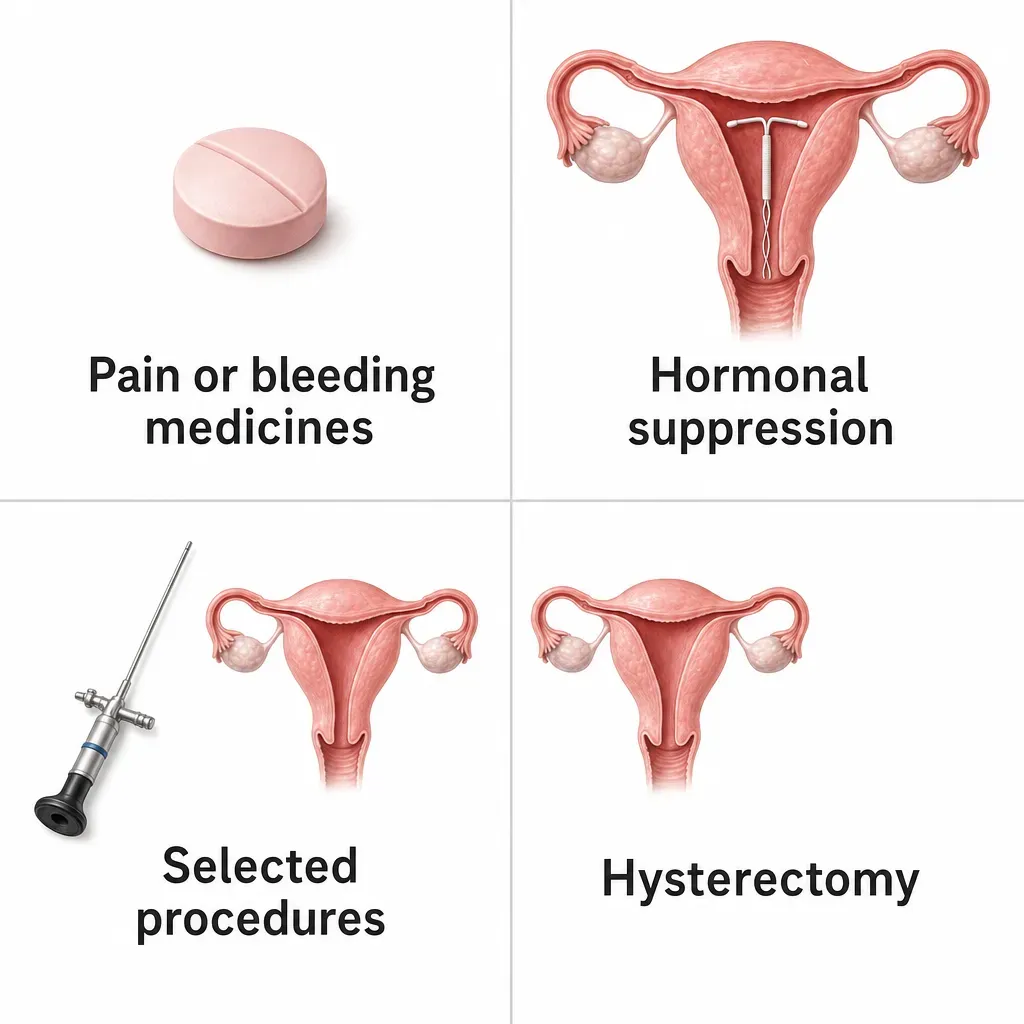
Current decisions still depend on symptoms, ultrasound or MRI findings, coexisting conditions, and fertility goals. Options may include medicines for pain or heavy bleeding, hormonal suppression, and selected procedures or surgery. Hysterectomy is definitive treatment for uterine adenomyosis when appropriate, but it ends the possibility of carrying a pregnancy and does not treat coexisting endometriosis outside the uterus.
If you’d like a second opinion on your imaging or a recommended treatment, our team at Lotus Endometriosis Institute can review your options.
Questions to take to your own doctor include:
- What specific imaging features support adenomyosis, and is the involvement focal or diffuse?
- Could endometriosis, fibroids, or another condition also be contributing to my symptoms?
- Would any additional test change my treatment plan?
- Which established options fit my priorities for pain, bleeding, and future pregnancy?
- If a newer treatment is suggested, has it improved symptoms or fertility outcomes in people, rather than only changing laboratory markers?
References
Li, Xu, Zhao et al.. The inconsistent pathogenesis of endometriosis and adenomyosis: insights from endometrial metabolome and microbiome. mSystems. 2025. PMID: 40261026 PMCID: PMC12090731
Guzelbag, Bestel, Katran et al.. Shorter Anogenital Distance in Women with Adenomyosis Diagnosed by MUSA 2022 Criteria: A Prospective Case–Control Study. Journal of Clinical Medicine. 2026. PMID: 41753007 PMCID: PMC12941305
Luna Arana, Pereira Sánchez, Vaquero Argüello et al.. The Role of Chronic Endometritis in Endometriosis: A Personalized Diagnostic Tool?. Journal of Personalized Medicine. 2026. PMID: 41745366 PMCID: PMC12942335
Yang, Li, Cao et al.. Mechanistic insights into inflammatory cytokines in adenomyosis-induced infertility (Review). International Journal of Molecular Medicine. 2026. PMID: 41789648 PMCID: PMC12959618
Yan, Wang, Liu et al.. Impaired PIEZO1 function drives uterine hypercontractility in adenomyosis-associated dysmenorrhea. Human Reproduction Open. 2026. PMCID: PMC12981915
. Pathogenesis of Adenomyosis: An Integrated Review of Cellular Origins, Molecular Mechanisms, and Intersecting Diseases. Journal of Cellular and Molecular Medicine. 2026. PMID: 41968335 PMCID: PMC13070875
. Sphingomonas paucimobilis ‐Driven Epithelial–Endothelial Transition in Adenomyosis Pathogenesis. Advanced Science. 2026. PMID: 41861114 PMCID: PMC13205861
Quick Answers
When is hysterectomy recommended for adenomyosis?
Hysterectomy is typically considered for adenomyosis when severe symptoms come from the uterus and you’re not planning future pregnancy. It is usually weighed most strongly when conservative treatments haven’t provided acceptable relief, aren’t tolerated, or don’t fit your goals.
Which adenomyosis symptoms most affect daily life?
Heavy or prolonged periods and severe period pain usually cause the biggest disruption to daily life with adenomyosis. Bleeding can affect work, school, travel, and sleep, while fatigue, pelvic pressure, and pain with sex for some people can add to the burden.
Why do I have chronic fatigue and pelvic pain?
Chronic fatigue and pelvic pain can come from endometriosis, adenomyosis, or more than one condition. Inflammation, disrupted sleep, heavy bleeding and ongoing pain can drive fatigue, while the nervous system can become more pain-sensitive over time.
Why does sex hurt more around my period?
Pain with sex that worsens around your period often points to inflammation and more reactive pelvic nerves before and during bleeding. Endometriosis can amplify pain signals, and adenomyosis can make the uterus unusually tender and crampy.