



Can Wild-Grape Compounds Help Endometriosis Pain?
What this early lab evidence means for supplements, non-hormonal options, and your next doctor visit
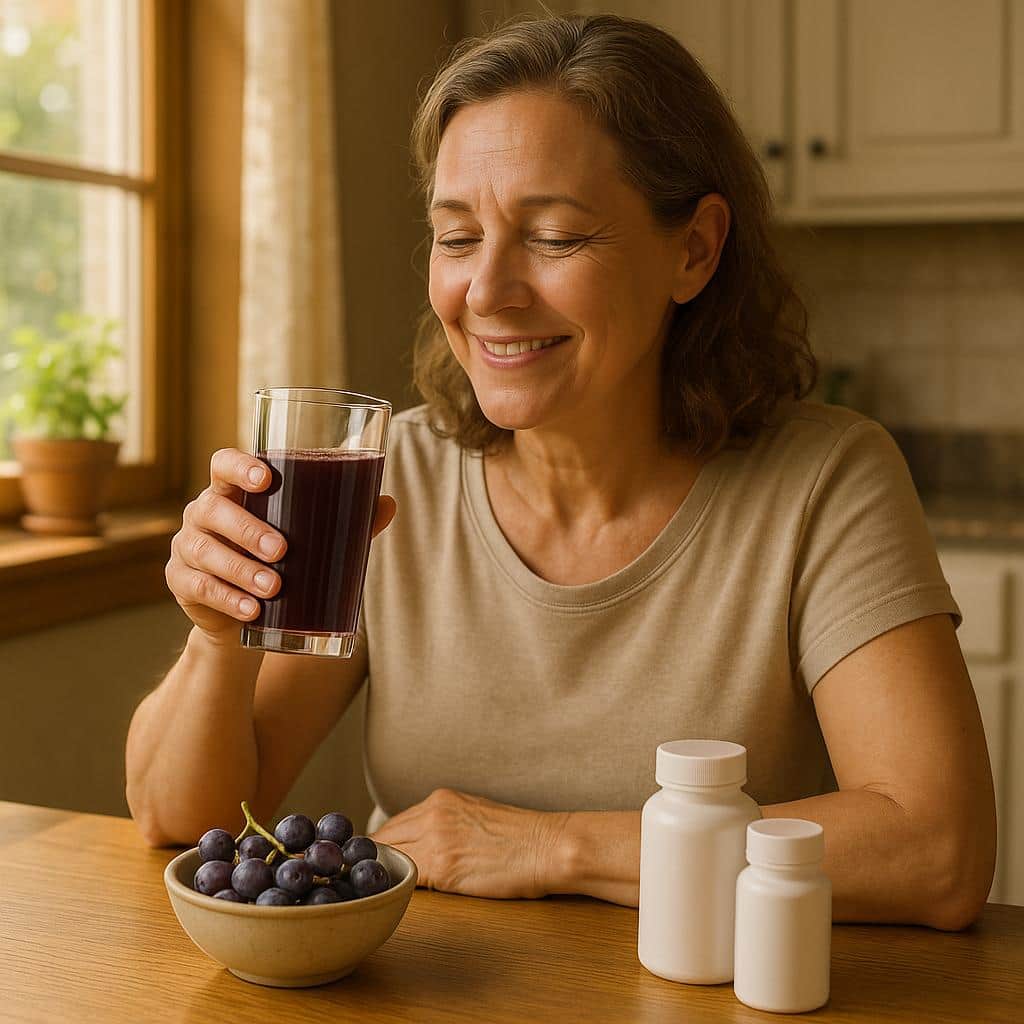
Endometriosis carries the emotional side effect of whiplash when trying treatment after treatment. If hormones help but the side effects are brutal—or if you’re trying to conceive—hearing about a “non-hormonal” option can feel like a lifeline. The question then becomes, is it bogus or does it really help or at at least help some.
That’s why you may see buzz about wild-grape compounds (especially something called ε‑viniferin, a relative of resveratrol). Recent lab research suggests ε‑viniferin can calm certain inflammatory signals and reduce “movement” behaviors of endometrial stromal cells in a dish—two processes that are relevant to how endometriosis can behave in the body.
Here’s the patient-centered bottom line: there is no proof that wild-grape supplements treat endometriosis. But it offers a clue about where future non-hormonal treatments might come from—and it can help you make safer, more informed decisions when you see supplement claims online. If you're at your wits end, it is also not likely to be dangerous although supplements or medications during an early pregnancy all potentially carry risk. So, be careful in that regard.
What is ε‑viniferin (and why are people talking about it)?
Researchers are interested in ε‑viniferin, a plant compound, for endometriosis because two themes keep coming up that may be influenced by this resveratrol relative:
- Inflammation (especially signaling molecules like IL‑6 and inflammatory pathways like NF‑κB)
- Cell migration/invasion (how cells move and penetrate tissues—relevant to how lesions establish and persist)
In lab settings, ε‑viniferin appears to reduce some inflammatory outputs and reduce migration/invasion behavior of endometrial stromal cells. That sounds promising—but whether it translates to fewer symptoms in real life is a separate question.
What benefits might this translate to—if it ever works in people?
If a future therapy based on ε‑viniferin actually works in humans, the hoped-for real-world impacts would be things you care about, like:
- Less pelvic pain and inflammation-driven flares
- Reduced lesion activity or progression
- A non-hormonal option for people who can’t tolerate hormonal therapy or are trying to get pregnant
But this specific evidence does not show any of that yet. It does not measure pain, bleeding, fatigue, fertility, lesion size, or quality of life—because it wasn’t done in patients.
What the lab results actually suggest
This research looked at two broad targets: immune/inflammation signals and endometrial stromal cell behavior.
1) Inflammation signals: IL‑6 and NF‑κB went down
In immune-like cell models, ε‑viniferin lowered IL‑6 at the gene (mRNA) level and the protein level after an inflammatory trigger. It also reduced NF‑κB activity (a “master switch” that can turn on many inflammatory genes).
Why you might care: IL‑6 is often elevated in inflammatory states and has been discussed in endometriosis contexts. Calming IL‑6/NF‑κB could be relevant to symptom flares—if a treatment can reach the right tissues at the right dose in the human body.
Important nuance: not every inflammatory marker changed. For example, some inflammatory gene readouts (like iNOS or IL‑1β in that particular setup) weren’t clearly suppressed. That matters because endometriosis inflammation is not one single switch you turn off. Rather, it’s a network.
2) Endometrial stromal cells: migration and invasion decreased in a dish
In an immortalized human endometrial stromal cell line (meaning these cells just keep growing in a laboratory Petri dish), ε‑viniferin reduced:
- Migration (cells moving across a surface)
- Invasion (cells moving through a barrier—more similar to tissue penetration)
Why you might care: migration/invasion are part of the “how could lesions establish or spread?” conversation. But here’s the key reality check: cells behaving differently in plastic lab wells is not the same as lesions shrinking in a pelvis.
3) Gene-expression shifts that are “interesting,” not definitive
The study also reported changes in genes that could relate to cell cycling or tissue invasion (for example, upregulation of CDKN2A and downregulation of HPSE, FGFR4, TNFSF10). This is best understood as hypothesis-building: it suggests possible pathways to explore, not a proven mechanism that predicts symptom relief.
Explore New Non-Hormonal Relief Options
Our specialists are here to help you understand your condition and explore your treatment options.
Schedule Your ConsultationThe biggest question: does taking a supplement reproduce these effects?
Right now, you should assume we don’t know. A lab study can bathe cells in a specific concentration of a compound and observe effects. Your body is not a Petri dish. When you swallow a supplement, several make-or-break steps determine whether it can do anything meaningful:
- Absorption: does it even get into your bloodstream?
- Metabolism: does your liver break it down into something else?
- Tissue levels: can it reach pelvic lesions or peritoneal fluid at a helpful concentration?
- Safety: what happens with repeated use, interactions, or higher doses?
This research does not establish a human dose, safety profile in endometriosis patients, or whether oral intake can achieve the concentrations used in the experiments.
So if you’re thinking, “Should I eat wild grapes or take resveratrol/wild-grape extract for my endo?” the most accurate answer today is: it’s unproven, and supplement marketing may run far ahead of the evidence.
Is this a “non-hormonal alternative” you should try now?
Not as a replacement for proven care.
It’s understandable to want non-hormonal options. Many people can’t tolerate hormonal side effects, have migraines with aura, have clot risk, or are trying to conceive. But based on current evidence, ε‑viniferin is best viewed as a research lead, not a ready-to-use treatment.
If you want to explore supplements anyway, think of it like this: you’re not choosing between “supplement vs nothing.” You’re choosing between “supplement with uncertain benefit and uncertain dosing” vs “a plan with known benefit/risk tradeoffs” (NSAIDs, hormonal suppression, pelvic floor PT, excision surgery evaluation, etc.). Also, in general, the more anti-inflammatory you can make your body through food and lifestyle choices, the better. This research fits in line with that prudent goal.
Practical takeaways: how to use this information without getting burned
If you’re curious about trying a grape-derived antioxidant supplement, use it as an add-on conversation—not a solo plan—and protect yourself from common traps.
Questions to ask your clinician or pharmacist (bring your exact brand/dose):
- Could this interact with my medications (blood thinners, SSRIs/SNRIs, hormonal meds, antihypertensives)?
- Given my symptoms and goals (pain control vs conception), what would we track to know if it’s helping?
- How long would we trial it before deciding it’s not worth it?
- Are there safer, better-studied non-hormonal options for inflammation/pain in my situation?
What to watch for if you try any polyphenol/antioxidant supplement:
- New bruising/bleeding, stomach upset, headaches, mood changes, or worsened reflux
- Any change in your cycle pattern or spotting (especially if you’re on hormonal therapy)
- If you’re trying to conceive: don’t assume “natural” means “fertility-friendly”—ask explicitly
Reality check: what we still don’t know
Even if ε‑viniferin or similar compounds eventually become part of an endometriosis treatment strategy, they may not help everyone. Endometriosis is heterogeneous: different lesion types, different immune profiles, different drivers of pain (lesion inflammation vs nerve sensitization vs pelvic floor dysfunction vs adenomyosis). Different molecular pathway drivers are probably at work and vary a lot between individuals. So, if you do try it after discussion with your doctors, or anything else like it, and it is not working after a month or so, it is not prudent to continue.
Most importantly, this evidence is preclinical. The next steps that would make this clinically meaningful are: animal models that measure lesion burden and inflammation in vivo, then human trials that measure outcomes you actually feel—pain, function, quality of life, bleeding, fertility, and side effects.
Until then, use this as a way to stay informed about emerging non-hormonal targets (like IL‑6/NF‑κB), not as proof that a wild-grape supplement will treat your endometriosis.
References
Lin, Naiki, Kojima, Hakamata, Fukatsu, Hasegawa, Wakatsuki, Koide, Umezawa. Anti-inflammatory and anti-migratory properties of wild-grape-derived ε-viniferin in human endometrial cells: A potential therapy for endometriosis. Molecular Medicine Reports. 2025. PMCID: PMC12365741. PMID: 40778473.
Quick Answers
How long do endometriosis flare-ups last?
Endometriosis flare-ups don’t have one “usual” length—some people feel a spike in symptoms for a few hours to a couple of days, while others have flares that stretch across an entire cycle window or blend into more constant pain. Many flares track with hormonal shifts (often before and during a period), but bowel, bladder, pelvic floor, or nerve-related pain can flare at different times and may not follow a neat calendar pattern.
When flares start lasting longer or happening more often, it can be a sign that multiple pain drivers are stacking—ongoing inflammation from lesions, adhesions/fibrosis that can “tether” organs, and sometimes central sensitization, where the nervous system becomes more reactive over time. That’s why symptom management alone can feel like a band-aid if active disease is still present. If you’re noticing prolonged, unpredictable, or escalating flares, our team can help you map your pattern, identify what’s likely driving it, and discuss a plan that addresses both symptom control and the underlying endometriosis.
What causes estrogen dominance with endometriosis?
“Estrogen dominance” in endometriosis usually isn’t just about making too much estrogen overall—it’s more often about an estrogen-favoring environment in the pelvis and within the lesions themselves. Many endometriosis lesions can produce estrogen locally (for example, through higher aromatase activity), and that local estrogen can help lesions survive, inflame surrounding tissue, and stimulate nerve growth that drives pain. At the same time, endometriosis commonly behaves as a chronic inflammatory condition, and inflammation can reinforce estrogen signaling and keep the cycle going.
Another key piece is that endometriosis often shows a weaker response to progesterone (“progesterone resistance”), so the normal hormonal braking system that should counterbalance estrogen doesn’t work as well. This can make symptoms feel very hormone-driven even when blood hormone labs look “normal.” Because endometriosis is multifactorial and likely includes different subtypes, the specific drivers of estrogen dominance can vary from person to person—genetics/epigenetics, immune dysfunction, and tissue-level changes can all play a role. If you’re trying to make sense of your symptoms or why hormonal suppression hasn’t brought lasting relief, our team can help you sort out what may be driving your disease and discuss options that focus on treating the endometriosis itself, not just temporarily quieting it.
Can I fly with a large endometrioma?
Yes—many people can fly with an endometrioma, even a large one, but “safe” depends on your individual risk profile and symptoms. The main in-flight concern with a larger ovarian cyst is an acute complication like torsion (the ovary twisting) or, less commonly, rupture—events that can happen on any day, but feel especially stressful when you’re far from care. Cabin pressure changes aren’t known to make endometriomas expand, but dehydration, constipation, prolonged sitting, and limited access to pain control can make a pelvic pain flare much harder to manage mid-flight.
If you’re having escalating one-sided pelvic pain, significant nausea/vomiting, fevers, dizziness/faintness, or pain that suddenly becomes severe, we generally want you evaluated before you travel—those can be warning signs that change the plan. If you do fly, think through logistics that reduce strain: choose an aisle seat if possible, plan for gentle movement and hydration, and have a clear pain plan for the travel day so you’re not improvising at 30,000 feet. If the endometrioma is growing, very symptomatic, or affecting fertility planning, our team can help you map next steps—whether that’s careful monitoring, symptom control while you travel, or discussing targeted treatment options designed to treat the disease rather than just chasing flares.
Can I keep working with endometriosis?
Yes—many people with endometriosis keep working, but it often requires a realistic plan around symptoms like pain, fatigue, brain fog, heavy bleeding, and unpredictable flares. Work becomes harder when endometriosis pain isn’t just “period pain,” but a complex, whole‑nervous‑system experience that can persist throughout the month and sometimes continues even after partial treatments. If your job performance is being affected, that’s not a personal failure—it’s a sign your symptoms need more targeted evaluation and a clearer strategy.
In our practice, we think about work in two parallel tracks: managing symptoms so you can function day to day, and treating the underlying disease when it’s driving ongoing inflammation, adhesions, or organ involvement. Depending on your situation, this may include a structured pain management approach (often multimodal) and, when appropriate, excision surgery planning based on a careful review of your history, imaging, and prior operative/pathology reports. If you’re wondering what’s realistic for you—whether that’s staying at work with accommodations, reducing hours temporarily, or planning time off for treatment—reach out to schedule a consultation so our team can review your records and help you map out next steps.
How do I explain endometriosis to my employer?
It often helps to keep your explanation simple and work-focused: endometriosis is a chronic inflammatory condition where tissue similar to the uterine lining grows outside the uterus and can cause significant pelvic pain, fatigue, and GI or bladder symptoms. Symptoms can flare unpredictably and aren’t always limited to your period, which is why you may need flexibility at certain times. You don’t need to share intimate details—just the functional impact (for example: pain, fatigue, and medical appointments can affect attendance, sitting/standing tolerance, or concentration).
If you’re requesting support, be specific about what would help you do your job well, such as intermittent time off for flares, the ability to work from home when symptoms spike, scheduled breaks, or flexibility around medical visits and potential procedures. Many patients find it useful to frame this as a long-term health condition with variable days rather than a one-time illness, and to document patterns of symptoms and missed work so your needs are clear.
If you’d like, our team can help you describe your condition and anticipated care in a medically accurate way that supports workplace accommodations, especially if symptoms are affecting your ability to function consistently. You can also explore our educational resources on endometriosis and work impacts, and reach out to schedule a consultation if you’re looking for a clearer plan for diagnosis and treatment.